We’ve been struggling to put into words our thoughts around the most recent helicopter round up of Sand Wash Basin’s wild mustangs. We knew processing these thoughts in a post would be extensive so turned to our blog instead.
There are a lot of opinions regarding wild horses and common perceptions and themes that come to the forefront of every round up, so we want to address those here in this post.
But first, let’s go through a brief history on the topic of wild horse protection. We’ll add in lots of pictures to keep you interested!
The federal protection of America’s wild horses began with public concern over what was happening to horses on the Western range.
- The 1950s: Velma Bronn Johnston, known as “Wild Horse Annie”, began campaigning for wild horses after witnessing their brutal treatment after being captured for commercial purposes. Advocacy often starts small and this was no different. Velma was driving to work near Reno, Nevada, when she noticed blood coming from a livestock truck and trailer ahead of her. She began a movement to bring awareness of their plight to the public.
- 1959: Congress passed the Wild Horse Protection Act, commonly called, “The Wild Horse Annie Act”. It prohibited the use of motor vehicles or aircraft to hunt wild horses and burros on public lands and prohibited the use of poison at water holes to kill or capture them.
- 1971: By 1971, wild horse population on public lands had declined significantly. Following continued public pressure, Congress passed the Wild Free Roaming Horses and Burros Act, signed into law in December of 1971. The law declared horses and burros, “living symbols of the historic and pioneer spirit of the West” and required they be protected from capture, branding, harassment, and death. Important to note here, Congress directed that they be considered, “an integral part of the natural system of public lands”. This is very important, don’t lose sight of that line. We will come back to it.
- Late 1970s: Congress subsequently amended the law. The Federal Land Policy and Management Act of 1976 authorized the use of helicopters and motorized vehicles in wild horse management. The Public Rangelands Improvement Act of 1978 further established the framework for identifying and removing animals determined to be “excess” while continuing federal policy of protecting wild free roaming horses and burros.
- Today: The result of this is the system we know today: the Bureau of Land Management and the U.S. Forest Service are charged with protecting and managing wild horses and burros on designated federal public lands.
The program has changed substantially since 1971 but its foundation has always been a law born from one woman, who cared enough to advocate for living animals who had no voice.
What is the Bureau of Land Management?
The Bureau of Land Management (BLM) is a federal agency within the U.S. Department of the Interior. It was created in 1946 when the General Land Office and the U.S. Grazing Service were combined. Today, the BLM is the largest land manager, responsible for approximately 245 million acres of public land, as well as roughly 700 million acres of federal mineral estate land.
The BLM operates through several layers: U.S. Department of the Interior>State Offices>District Offices>Field Offices.
The structure of this is important. Although the Wild Horse and Burro Program is a federal program, many management decisions are implemented through the state, district, and field office structure responsible for that herd and land.
In Colorado, the Colorado State Office oversees more than 8.3 million acres of public land. It’s divided into district and field offices that manage particular areas of the state.
So when we say the BLM, we are not talking about a single office or a group of people in Washington D.C. making every decision. We are talking about a federal land management agency with national leadership and policy, state level oversight with district and field offices responsible for implementing that management on the ground.
The BLM manages the wild horse and burro population using an Appropriate Management Level, or AML, number.
AML is the population range BLM establishes for wild horses and burros within each Herd Management Area (HMA), while maintaining a “thriving natural ecological balance”. AML is normally expressed as a range rather than a number, meaning there is a low AML and a high AML.
The BLM’s position is that some population limit is necessary. Wild horse populations can grow rapidly, while forage and water are finite and vary with drought, wildfire and other environmental conditions. BLM argues that allowing populations to grow unchecked can eventually damage vegetation and water resources, resulting in horses suffering from inadequate food and water. The BLM states that AMLs aren’t simply arbitrary horse counts. They are developed through land use planning and analysis of information, including vegetation, soils, water, weather, and population data.
At a glance, this sounds reasonable. But AML is also the benchmark BLM uses to determine when wild horses are considered "excess" and subject to removal under federal law. That makes how AML is established and reevaluated extremely important.
For a wild horse, AML is the difference between a life of freedom or forcible removal from the range, only to end up standing for months, if not years, in a cramped holding pen.
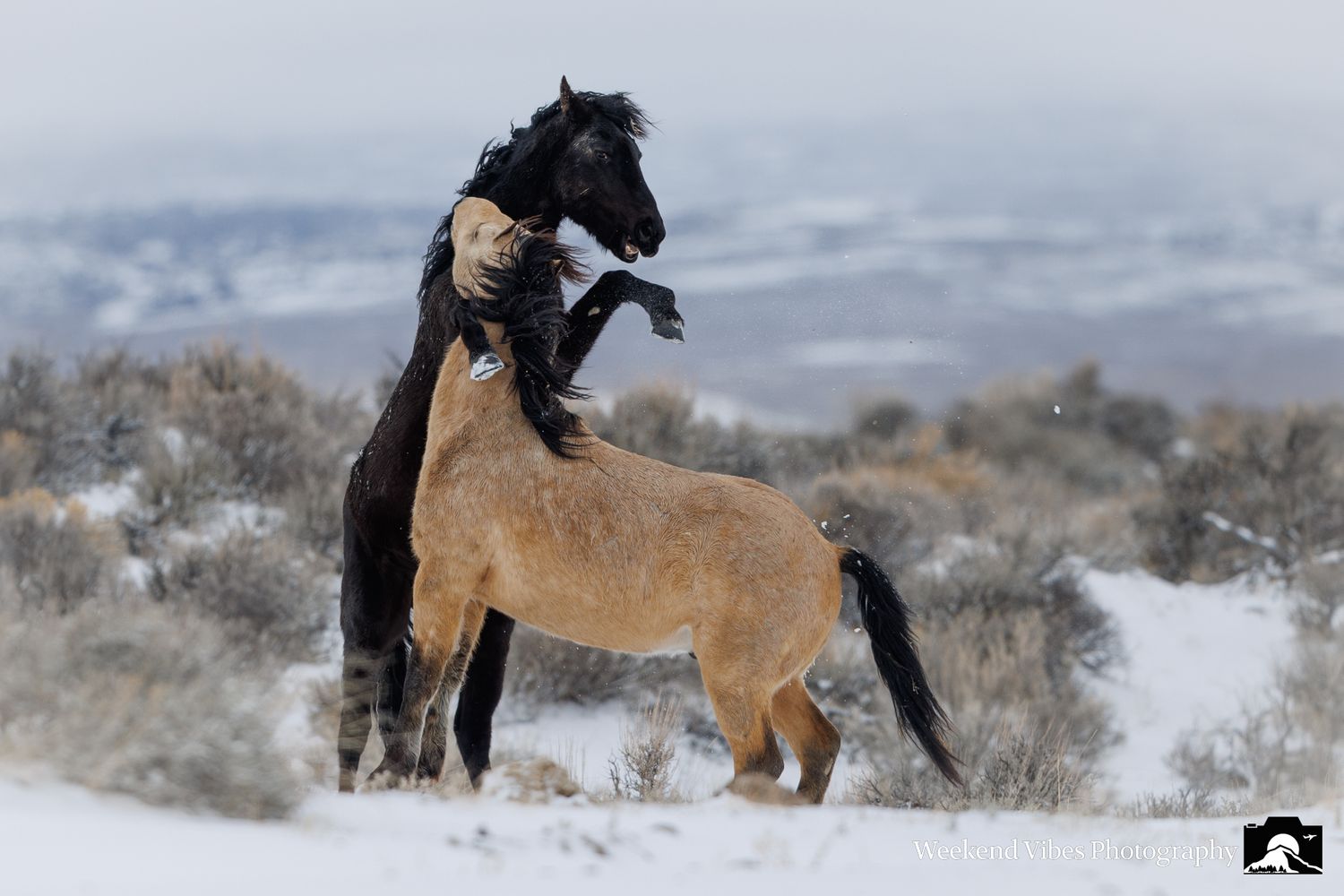
BLM and some members of the public like to point to AML as a scientifically backed number.
So how scientific is it?
One of the strongest critiques came from the National Research Council of the National Academies, which BLM itself asked to review the Wild Horse and Burro Program.
In 2013, the National Academies identified significant weaknesses in the AML process. It found that BLM guidance lacked sufficient specificity for establishing and adjusting AMLs and provided inadequate detail about monitoring rangeland conditions. It also noted that concepts such as “thriving natural ecological balance” lacked precise definitions and found that BLM's management of free ranging horses and burros was not supported by rigorous population monitoring procedures at that time.
Historical Government Accountability Office findings raise additional questions.
The GAO found that, before 1984, many AMLs were not based on rangeland monitoring data. Some were based on existing horse populations, administrative considerations, or agreements involving grazing interests. Of 26 BLM field offices surveyed, only 10 reported using rangeland data to establish AMLs. In Wyoming, GAO reported that approximately one-third of HMA AMLs had been established through agreements with local grazing interests whose private lands were interspersed with BLM lands. In 2008, GAO again found that BLM had not provided field offices with specific formal guidance for consistently establishing AMLs. GAO recommended standardized guidance, and BLM subsequently implemented guidance addressing that recommendation in 2010.
That does not mean AMLs have never been adjusted or supported by newer information. But it raises a fair question: When was each HMA's AML last subjected to a comprehensive, data driven evaluation using current conditions?
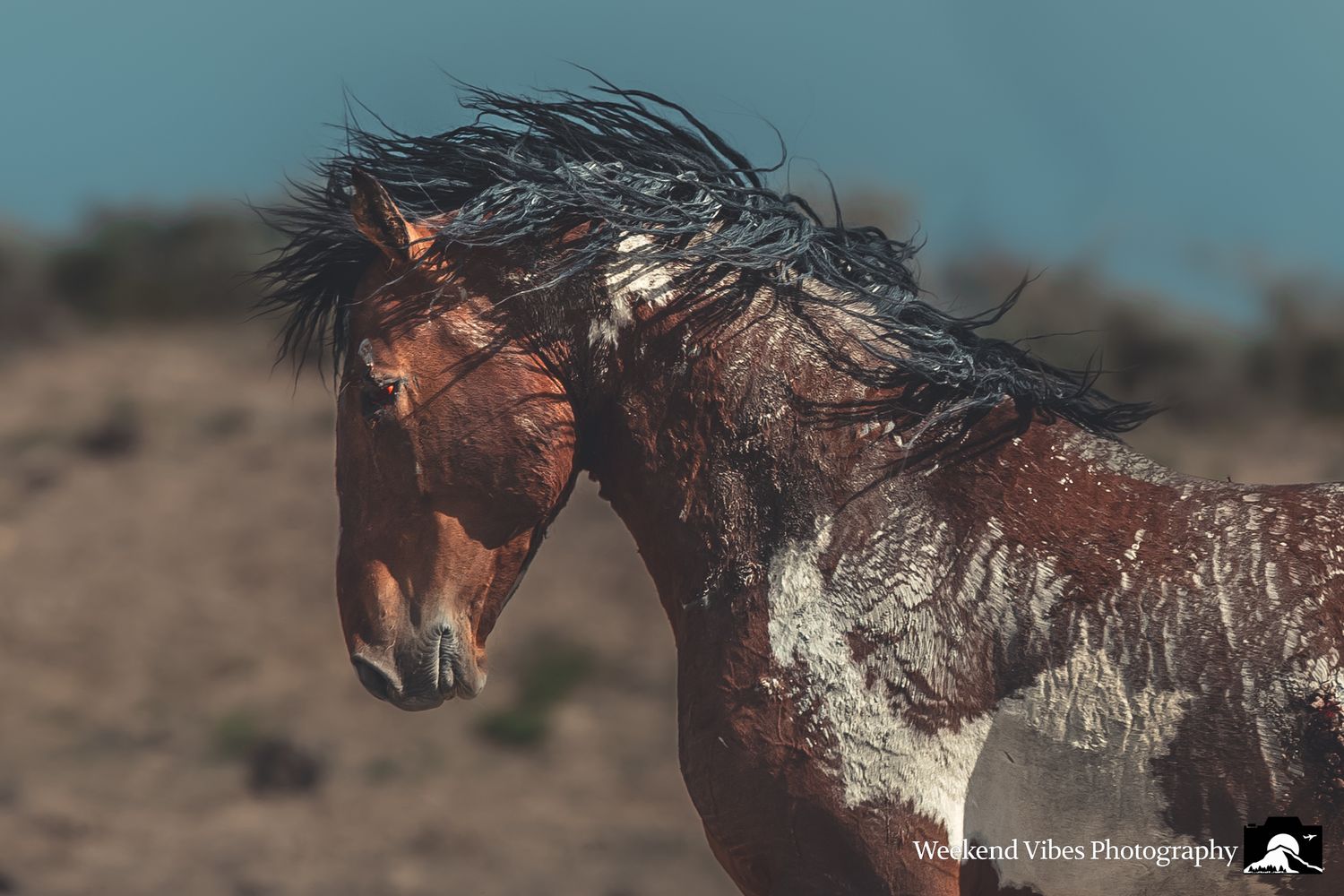
Wild horses are not the only consideration for AML. One of the most persistent issues in federal wild horse management is the relationship between wild horses and privately owned livestock grazing on public lands.
Private ranchers do not own BLM land, but the federal government issues grazing permits and leases allowing privately owned cattle and sheep to graze millions of acres of public land. BLM currently administers nearly 18,000 grazing permits and leases across more than 21,000 grazing allotments.
That overlap matters because livestock, wild horses, and wildlife all use the same finite forage and water resources.
The National Academies found that, in some HMAs, managers described calculating available forage by first accounting for forage allocated to existing livestock grazing privileges and then determining what remained for wildlife and wild horses. The report also found considerable variation among BLM offices in how those allocations were established.
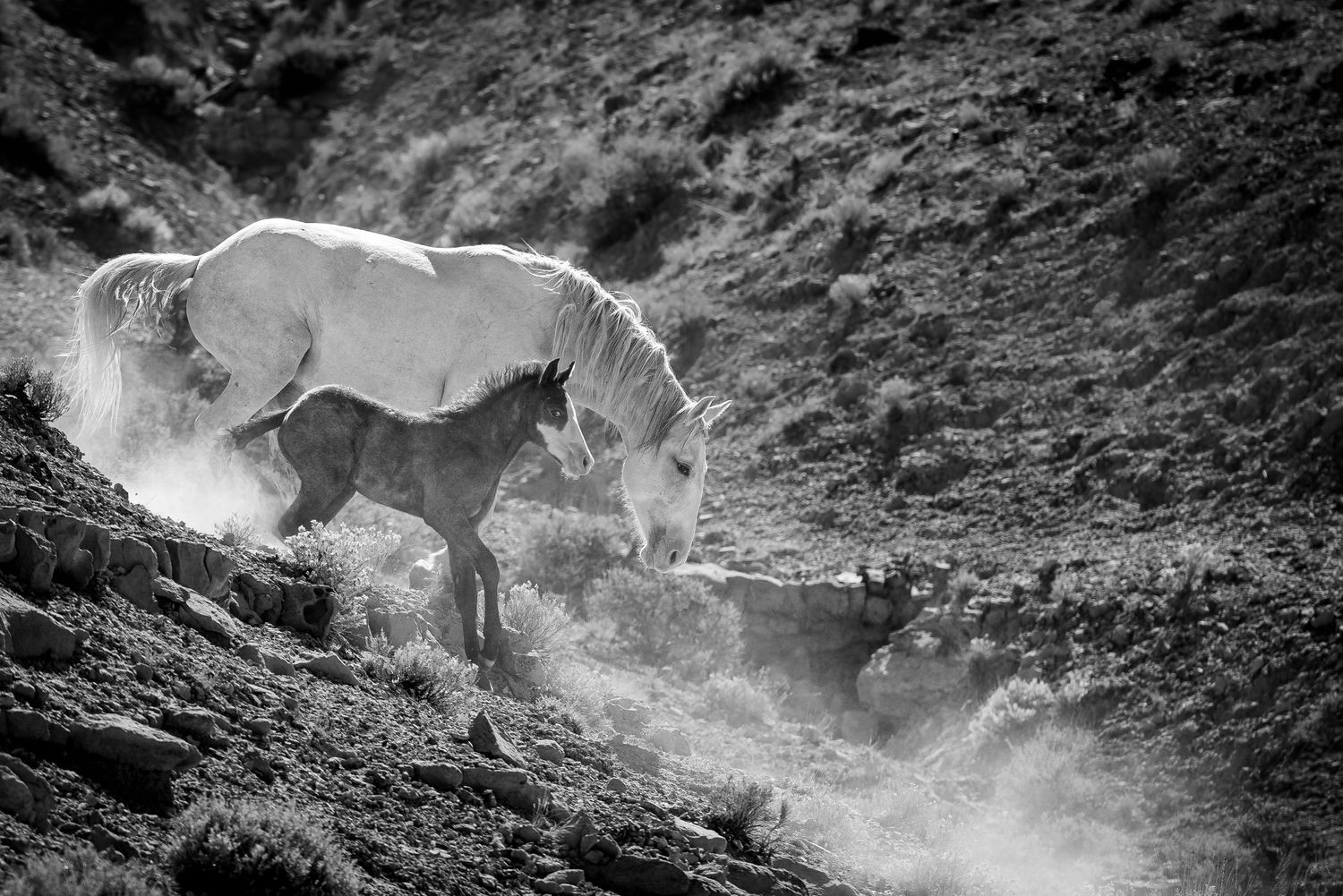
The Government Accountability Office has also documented the historical tension.
In 1989, GAO concluded that BLM had sometimes placed the interests of livestock permittees ahead of long term rangeland health and had not equitably treated wild horses when addressing overgrazing. Later GAO work in 2008 noted that wild horse removals had not always been accompanied by corresponding reductions in livestock grazing, even when overgrazing was an issue.
BLM conducts dedicated aerial population surveys to estimate the number of wild horses on the range. We have not found evidence that BLM conducts a comparable annual aerial analysis of privately owned livestock. Livestock use is instead primarily documented through the grazing permit system and operator reported actual use. So basically, the honor system. This distinction matters because wild horse population estimates are repeatedly updated and compared against AML, while the same cannot be said for all livestock and wildlife supported by the range.
This does not establish that ranchers control BLM or that every wild horse removal is conducted to benefit livestock producers. BLM is legally required to manage public lands for multiple uses, including livestock grazing, wildlife, recreation, conservation and wild horses.
But it does make the allocation of forage an important part of this conversation. When BLM determines how many wild horses an HMA can support, those horses are not being considered alone. Livestock grazing is already authorized across portions of these same public lands and forage is allocated among competing uses. That makes it important to look beyond the number of livestock authorized to graze and ask how much grazing is actually occurring.
With forage divided among competing uses, determining how many horses a landscape can support is important.
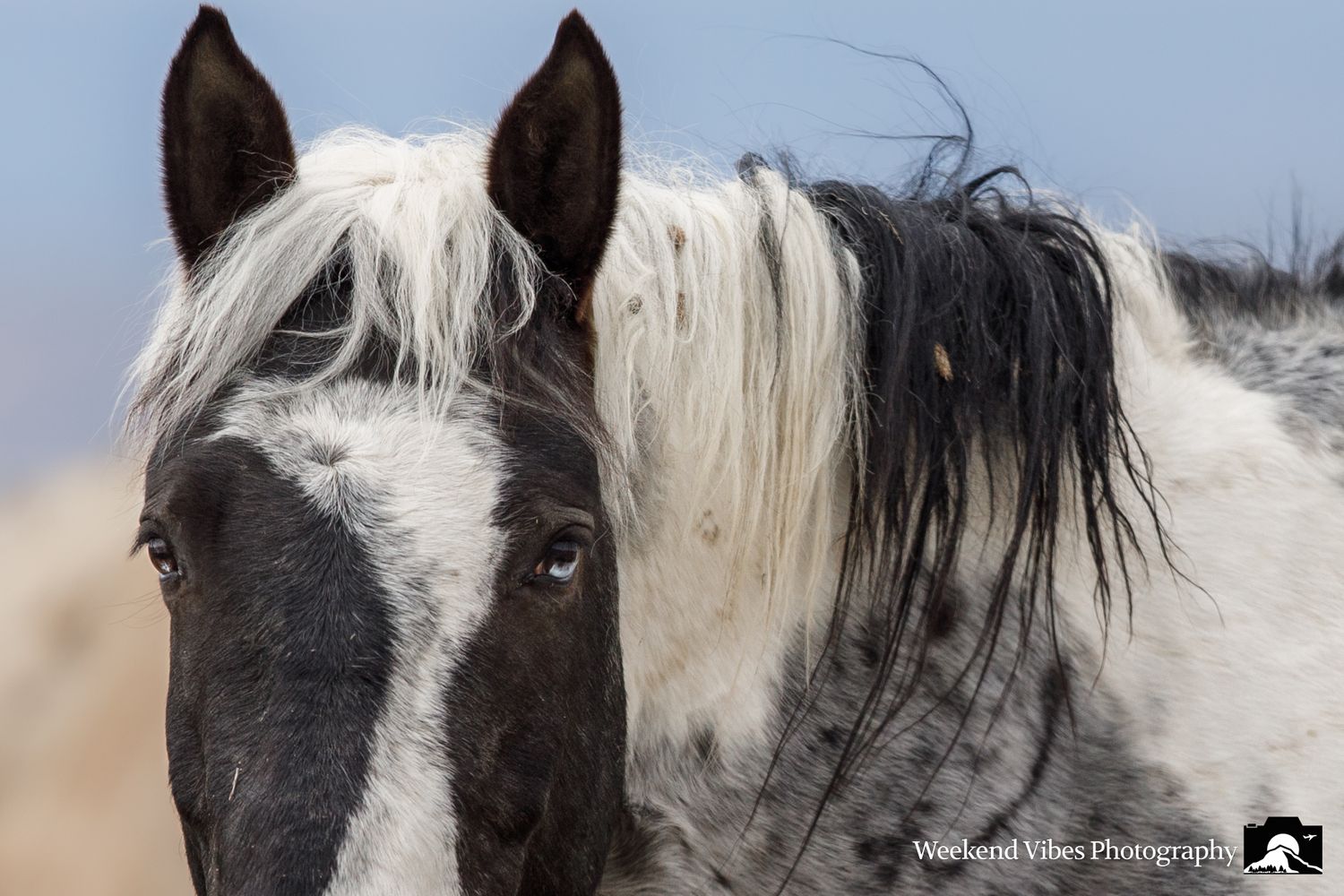
There is another reason current, site specific information matters: emerging research complicates the assumption that horse grazing is inherently synonymous with ecological degradation. Research increasingly demonstrates that free ranging horses are not simply consumers of forage, they also influence how ecosystems function.
A 2021 peer reviewed study published in Science documented horses and burros digging wells and water holes up to six and a half feet deep to reach groundwater in arid environments. These wells increased area surface water, reduced distances between water sources, and sometimes provided the only available surface water at study sites. Researches documented 57 different vertebrate species using these wells. The researchers described the horses and burros as "ecosystem engineers". Interestingly, we have personally seen the wild horses of Sand Wash Basin using their hooves to break the ice on frozen ponds in the winter, allowing any number of Sand Wash residents, including the livestock sheep, access to water during cold months.
A 2024 peer reviewed study published in Biological Conservation compared grasslands grazed by horses managed as “wild,” domestic horses, and sheep. Sheep are particularly interesting here as Sand Wash Basin HMA hosts hundreds, if not thousands, of sheep for several months every year.
Researchers surveyed 208 vegetation plots and found that areas grazed by horses managed as wild had greater plant species richness, evenness, and vegetation heterogeneity than sheep grazed areas. The authors concluded that horse grazing can help maintain or promote grassland diversity, particularly when horses are able to express natural grazing behavior.
Sweden conducted a three year study and found horse grazing could be incorporated into ecological restoration. A European rewilding study found that twice as many birds were located in a horse grazed area than a nearby ungrazed area.
Let's review a study conducted closer to home.
In 2019, USGS researchers studied the Little Books Cliffs HMA, near Grand Junction, Colorado. Researchers specifically studied manure and determined horses can act as long distance seed dispersers by transporting viable seeds through their digestive system and depositing them in manure. The study showed plants germinated from 30% of the horse manure samples.
Together, these studies challenge the idea that the presence of horses, or horse grazing itself, automatically establishes ecological degradation. They demonstrate that horses can also perform ecological functions that are easily overlooked when they are viewed solely as consumers of forage.
But forage consumption is a central part of how BLM manages both wild horses and livestock. And to understand how that forage is measured and allocated, we need to understand another BLM measurement: AUM.
An Animal Unit Month (AUM) is a standardized measure of forage use for one month. BLM generally considers one animal unit to be one cow and calf, one horse, or five sheep or goats. An important distinction: authorized AUMs represent permitted grazing use, not necessarily the amount actually used.
In BLM’s 2021 Sand Wash Basin Wild Horse Gather Environmental Assessment, the agency reported 6,377 active livestock AUMs for the portion of the Sand Wash Allotment within the HMA. Yet BLM’s 2008 through 2020 data showed average actual livestock use of approximately 2,103 AUMs for 33% of the authorized amount.
Earlier BLM records provide additional context. A 1997 Ecological Site Inventory estimated 4,961 available federal AUMs in the Main Sand Wash Pasture. BLM later summarized its monitoring data as:
- 4,961 AUMs: Available based on the 1997 Ecological Site Inventory
- 509 AUMs: 10-year average livestock use
- 1,234 AUMs: 10-year average wild horse use
- 3,218 AUMs: “Annual unused AUMs still available”
- 26%: Average combined livestock, wild horse and wildlife utilization
- 64%: Vegetation trend monitoring locations showing an upward trend
The reporting periods and measurements differ, so these figures should not be treated as directly interchangeable. But together, BLM’s records show why authorized grazing, actual grazing, available forage and carrying capacity are not the same thing.
So, Where Are We Today? BLM currently manages the Sand Wash Basin wild horse population with an AML range of 163–362 horses.
In 2026, BLM estimated 505 wild horses and described the population as approximately 140% above what the agency says the range can sustainably support, leading to another helicopter round up and removal of 245 horses.
That brings us to a critical question: If 362 horses represents the maximum population Sand Wash Basin can sustainably support, what current forage and carrying capacity analysis supports that number?
BLM’s own records show thousands of livestock AUMs have been authorized on this landscape while actual livestock use has been substantially lower. We understand livestock, horses and wildlife use the landscape differently, and forage availability, drought, seasonal use and current range conditions all matter. But these factors are precisely why current data matters.
How much forage does Sand Wash Basin produce today? How much is allocated to livestock? How much is actually used? How much is consumed by wild horses and wildlife? How much is consumed by livestock? And how much remains available?
If BLM states that 505 horses exceed the sustainable capacity AML of Sand Wash Basin, when their own data shows unused, available AUMs for the previous the 23 year period, the public should be able to see the current data and methodology supporting that conclusion.
We also can't talk about AML without bringing up another heated point of debate: Wild or Feral?
This debate deserves attention because it shapes the conversation before it even begins. You've probably heard some version of it.
- They're not wildlife. They're feral livestock.
- They aren't native.
- They're basically abandoned domestic horses.
Sometimes the word invasive gets thrown in for good measure.
There is truth mixed into that rhetoric, but the history is considerably more complicated than the soundbite suggests.
Horses evolved in North America. That isn't an advocacy position, it is part of the paleontological record. The National Park Service states plainly that horses evolved here before spreading to other parts of the world. Horses disappeared from North America near the end of the Pleistocene, while populations that had migrated into Eurasia survived.
Centuries later, their descendants returned with humans.
The BLM acknowledges this history as well. On its own "Myths and Facts" page, the agency states that “caballine horses did evolve in North America.” The BLM nevertheless considers today's free roaming horses descendants of domesticated animals and notes that many biologists would therefore describe them as feral. The agency itself, however, calls them wild horses because that is what Congress defined them to be.
And that distinction matters. Congress did not pass the Feral Livestock Management Act in 1971. It passed the Wild Free Roaming Horses and Burros Act.
As stated earlier, Congress declared these animals to be “living symbols of the historic and pioneer spirit of the West” and directed that they be protected from capture, branding, harassment and death. The law further directed that wild horses and burros be considered “an integral part of the natural system of the public lands.”
So why does the word feral remain so prominent in arguments about their management? Because language shapes perception.
Call an animal wildlife, and people tend to ask how its habitat should be protected. Call the same animal feral, and suddenly the question becomes how it should be controlled. Call it non native, and removal begins to sound like restoration. Call it invasive, and eradication can begin to sound like conservation.
The language becomes even more consequential when it is paired with another word used throughout federal wild horse management: Excess. First they become feral. Then non native. Then overpopulated. Then excess. And once an animal has been rhetorically transformed from a protected wild horse into an excess, non native animal competing for resources, removing it from the landscape becomes considerably easier to sell.
That does not mean every scientist or land manager who uses the term feral has an agenda. In biology, the term has a legitimate meaning: a free ranging population descended from domesticated animals. The BLM has itself used that terminology in technical documents, including describing North America's free roaming horses as biologically feral.
But scientific terminology and public rhetoric are not always the same thing. And this particular label leaves out a remarkable part of the horse's story.
The horse did not originate in Spain. It did not originate on a European ranch. The origin of equines began here, in North America, years before there was a Bureau of Land Management, a grazing permit, a livestock allotment or even a United States.
Today's wild horses unquestionably carry the genetic fingerprints of domestication. Many also descend from animals released or escaped from ranchers, miners, the U.S. Cavalry, Native Americans and others during relatively recent history. The BLM acknowledges that history. But reducing the entire story to “they're just feral livestock” erases everything that came before it. Perhaps even more importantly, their federal protection does not depend upon winning the native vs feral debate.
The BLM itself acknowledges this. Its current guidance states that the agency is required to manage wild horses as an integral part of the natural system “regardless of their ancestry.” The BLM says the evolutionary debate does not change its obligations under the Wild Free Roaming Horses and Burros Act.
That is an important point.
We can debate whether today's mustang should scientifically be called native, reintroduced, naturalized or feral. We cannot debate whether Congress called them wild. And we cannot use the word feral to quietly erase the protections Congress gave them.
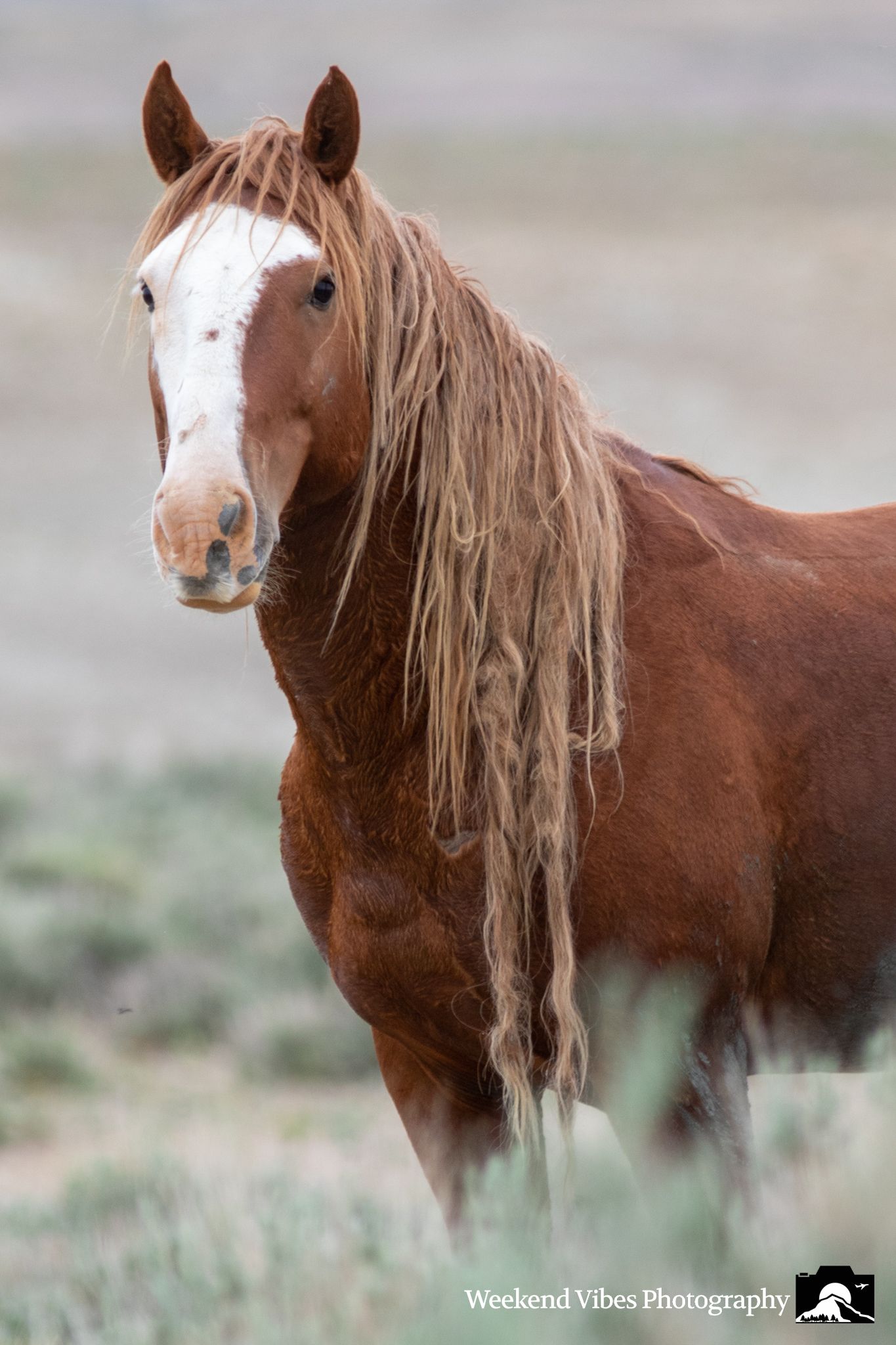
The words used to describe these horses can shape the conversation. But the people given a formal voice in their management can shape it too.
Understanding how decisions are made on public lands also means understanding who has a formal opportunity to advise the BLM. One is through the Resource Advisory Council, or RAC.
RACs are citizen based advisory groups established under federal law to provide recommendations to the BLM on public land management. Their role has roots in federal grazing policy and the BLM established the modern RAC structure as part of its 1995 grazing regulations. Their responsibilities have since expanded.
Today, the RAC advises BLM on issues including land use planning, recreation, energy development, livestock grazing, conservation, fire management, and wild horse and burro management.
Although the role of the RAC is advisory without authority, that does not make them insignificant. BLM describes RACs as a mechanism for bringing stakeholder perspectives directly into public land management and says their recommendations provide the agency with important feedback on current issues, concerns and proposals.
So who gets a seat at the RAC table?
RAC membership is deliberately structured around competing public land interests. A full RAC generally consists of 15 members divided among three stakeholder categories.
Commodity and Commercial Interests
This category specifically includes:
- Holders of federal grazing permits
- Energy and mineral development interests
- Timber interests
- Transportation and rights of way interests
- Off highway vehicle interests
- Commercial and developed recreation interests
In other words, ranchers holding federal grazing permits are specifically designated as one of the interests the RAC system is intended to represent.
Conservation and Non-Commodity Interests
This category includes:
- Environmental organizations
- Archaeological and historic organizations
- Dispersed recreation interests
- Wild horse and burro organizations
This is where wild horse advocates can receive formal representation.
Government and Community Interests
This category includes:
- State, county and local elected officials
- State natural resource agencies
- Tribal representatives
- Academics working in natural sciences or natural-resource management
- Members of the public at large
The structure is important because RACs were not designed to represent only conservation interests, ranchers or wild horse advocates. They were deliberately constructed to place people with competing interests in public lands at the same table.
RAC members are not elected by the public.
Individuals can apply or be nominated to serve. BLM evaluates nominees based on their education, training, experience, knowledge of the geographic area and ability to participate in collaborative decision making.
Members are ultimately appointed by the Secretary of the Interior, generally for three year terms. A person occupying a federal grazing seat is therefore not simply participating as an individual citizen; that seat exists specifically to provide representation for federal grazing interests. Likewise, a member appointed to a wild horse and burro seat represents that constituency.
The goal, according to BLM, is balanced representation among the competing interests that use and care about public lands.
The Northwest RAC advises BLM's Northwest Colorado District, including the Little Snake Field Office, the BLM office responsible for Sand Wash Basin.
The Northwest RAC currently has only four seats of the Conservation and Non Commodity Interests category filled. We will omit their names but show 3 seats for dispersed recreation and 1 seat for Archaeological/Historical. There is 1 vacant seat. The wild horses that call Sand Wash Basin home are not currently represented by a stakeholder in the Northwest RAC. As RAC members are appointed by the Secretary of the Interior, we can only speculate as to why that is.
Interested in representing wild horse and burro interests on the Northwest Colorado Resource Advisory Council? Individuals may nominate themselves when BLM opens a nomination period. Learn more about the Northwest RAC and the application process through the Bureau of Land Management.
Official BLM RAC application:
Apply to Serve on a BLM Resource Advisory Council
Northwest Colorado RAC page:
Now let’s talk about the wild horse and burro population itself.
According to BLM’s latest published range estimate, as of March 1, 2026, there are an estimated 85,466 wild horses and burros on BLM managed public lands. This number is broken out with 61,523 wild horses and 23,943 wild burros. The combined AMLs for all BLM HMAs is 25,592 animals.
Colorado’s specific estimate is 1,669, with a statewide AML of 817 across the four HMAs in the state. Colorado’s HMAs are Sand Wash Basin, Piceance/East Douglas, Spring Creek, and Little Book Cliffs.
Sounds like a lot but what about the animals currently in holding in the BLM care? How many are there? Keep in mind, this number changes constantly as we are here talking about round ups, which result in adoption events.
As of May 2026, BLM reports a total of 58,025 animals in holding. BLM themselves reported in February of 2026 that more than 63,000 horses and burros were in its facilities. That is a substantial change in three short months. We’d like to see a clear accounting of the placements, transfers, deaths, and other changes that account for the difference of 4,975 animals, but we digress.
Managing this system comes with substantial cost. Congress appropriated 142 million for BLM’s Wild Horse and Burro Management Program in 2025. In 2024, the actual expenditures were approximately 153 million, with roughly 101 million spent on off range holding alone.
To summarize this cost, the BLM spent approximately 8 million dollars gathering and removing animals from public lands in 2024 alone and over 101 million caring for animals currently in holding.
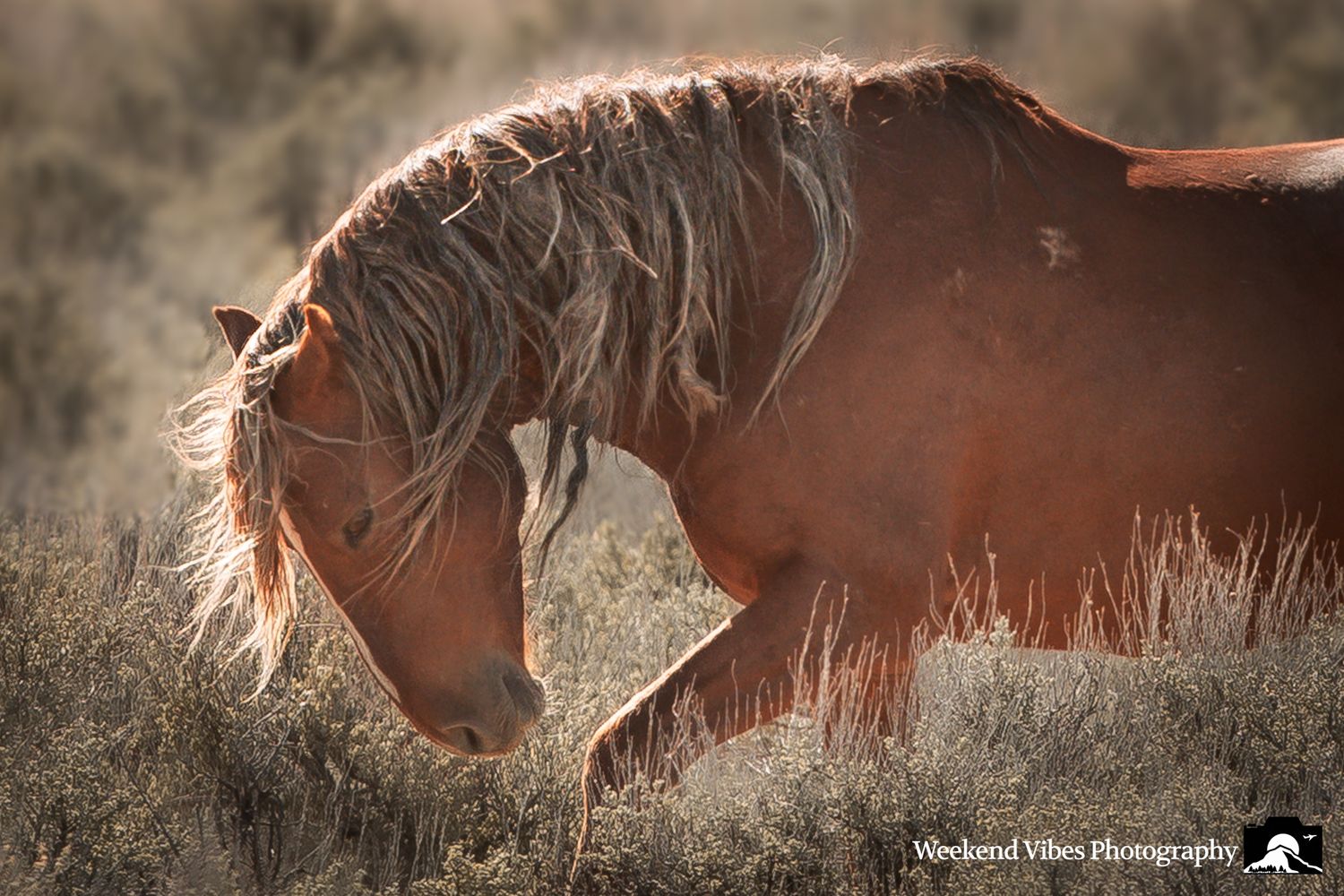
This alone should make folks think: Isn’t there a better way?
One of the biggest questions facing this program is whether more resources should be spent preventing population growth before horses have to be permanently removed. Removing a horse or burro is only the beginning of the government’s financial responsibility for that animal. If it isn’t adopted or sold, the federal government may be responsible for its care for years.
Fertility control offers a different strategy: reduce reproduction on the range so fewer horses ultimately need to be removed and placed into lifetime care. The BLM itself acknowledges that expanded fertility control has the potential to reduce long term costs. While the BLM administers some fertility control treatment itself, it also relies substantially on trained volunteers, partners, state funded professional darters and contractors.
For Colorado, the volunteer role is significant. BLM reported that wild horse partner groups contributed more than 15,000 volunteer hours in 2024, spending time identifying, tracking, and darting horses. Sand Wash Basin is a good example of this. BLM stated in July 2025 that fertility control there was “primarily administered by volunteers from the Sand Wash Advocacy Team and by professional darters, whose positions are funded by the State of Colorado”.
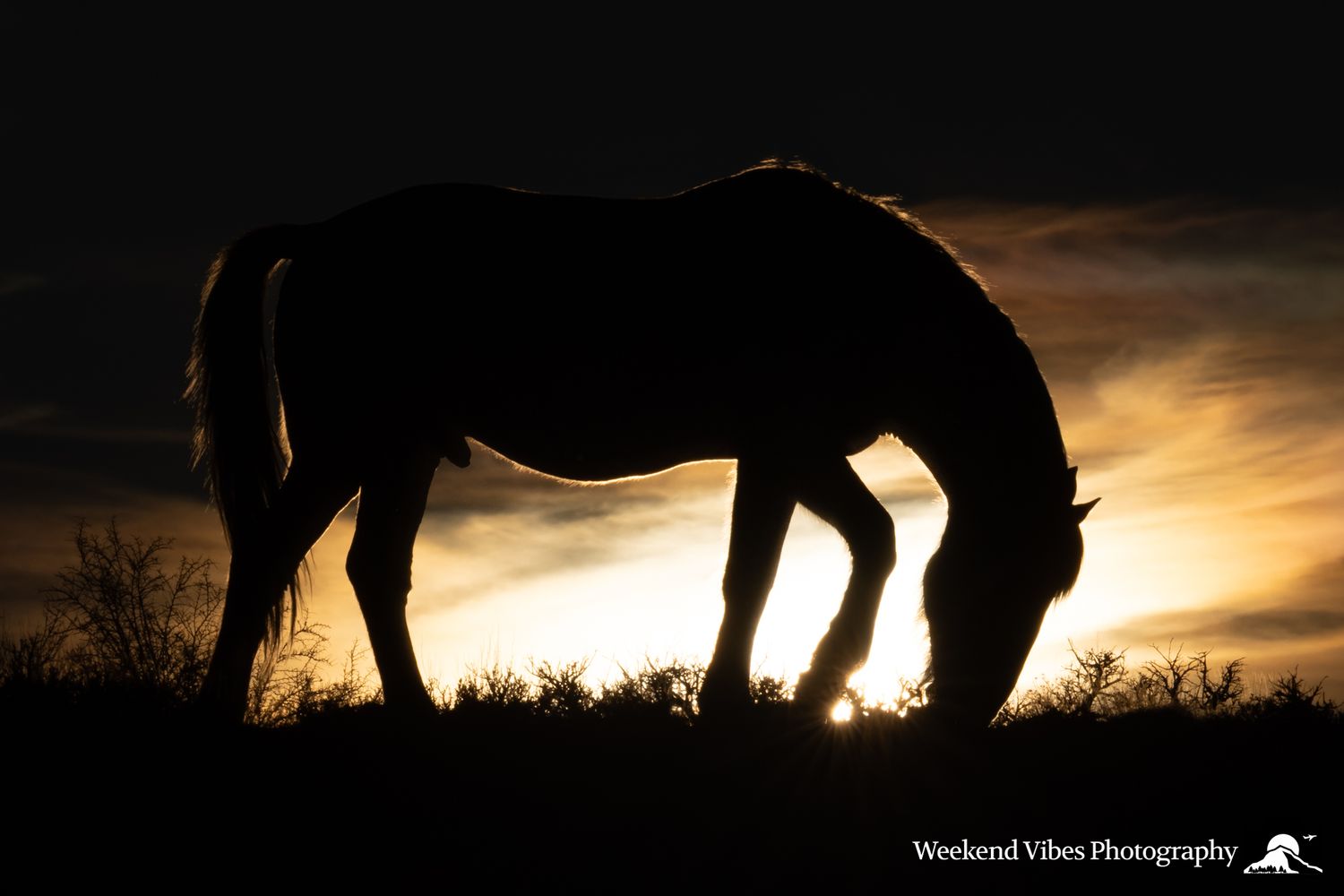
Wait, did you say funded by the State of Colorado? For a federally funded program? Let’s talk about that.
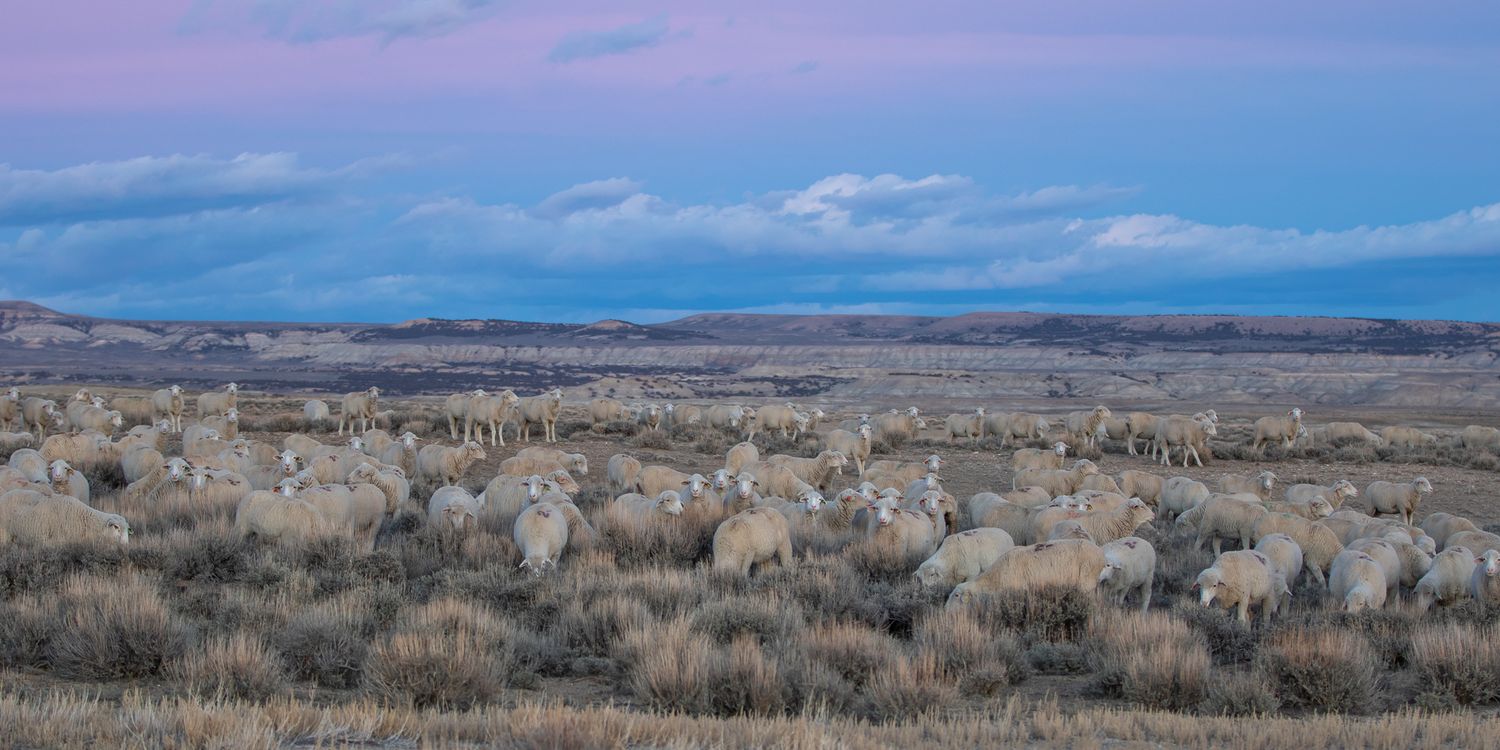
In August of 2021, BLM announced an emergency round up of Sand Wash Basin horses, citing severe drought, inadequate forage, and a population above AML (We'd like to add here that a few short weeks after the 2021 roundup, hundreds of sheep were happily munching away on the inadequate forage, as shown below). Its original plan was to round up 783 horses and return 50, 25 of which would be treated with fertility control.
The helicopter removal generated substantial public opposition. Colorado Governor Jared Polis publicly asked the BLM for a six month pause on wild horse round ups, although the BLM proceeded with the helicopter round up.
Nevertheless, the state became directly involved while the round up was underway. BLM ultimately stopped the round up earlier than planned. Its September 13, 2021, announcement stated, “With input from the State of Colorado we were able to end the Sand Wash gather earlier than expected.” The BLM announced it intended to work with Colorado on fertility control, water and fencing improvements, smaller bait/trap removals, and recruiting and training fertility control volunteers.
The state of Colorado's involvement came about due to thousands of communications sent to our public officials by concerned citizens. When you feel as though your voice doesn’t matter, please remember this. There are more horses free on the range today because of thousands of voices joined together.
Another problem with the BLM management of horses became very visible, following the 2021 round up. An equine influenza outbreak at the Canon City BLM holding facility where the Sand Wash and other Colorado horses were in holding killed nearly 100 horses in less than a week, with the final number of deaths reported at 146.
Advocates for Colorado’s horses did not let up. In 2023, Colorado put money and law behind their role to work with the BLM.
On May 20, 2023, Governor Polis signed Senate Bill 23-275 into law. The law committed 1.5 million to the Colorado Wild Horse Project Fund. It appropriated $400,000 specifically for fertility control population management. Colorado can’t take control from the BLM, this is still federal land and horses. Instead, the infrastructure was created to support and influence management in cooperation with the BLM. SB 23-275 created a state framework around three major ideas: fertility control, on range stewardship, and humane alternatives for horses removed from the range.
It also created the Colorado Wild Horse Working Group, bringing together state officials, legislators, advocates, ranching interests and others: BLM and Colorado’s Ute tribes were also authorized to participate. The group was directed to examine alternatives for off range horses, including a possible state preserve, sanctuaries, adoption support and other partnerships.
It also addressed something the BLM already admitted and Colorado had seen firsthand: fertility control heavily depended on volunteers. Sand Wash Advocate Team (SWAT) had been administering PZP in Sand Wash Basin since 2014. Colorado’s Department of Agriculture now describes its state program as an effort to stabilize herd numbers and reduce the cycle of population growth followed by round ups.
Important to note that the Colorado Working Group itself is advisory and cannot bind either state or federal government. However, there is still power here. Colorado lawmakers themselves wrote the recent large helicopter round ups into their findings explaining why the state needed to act.
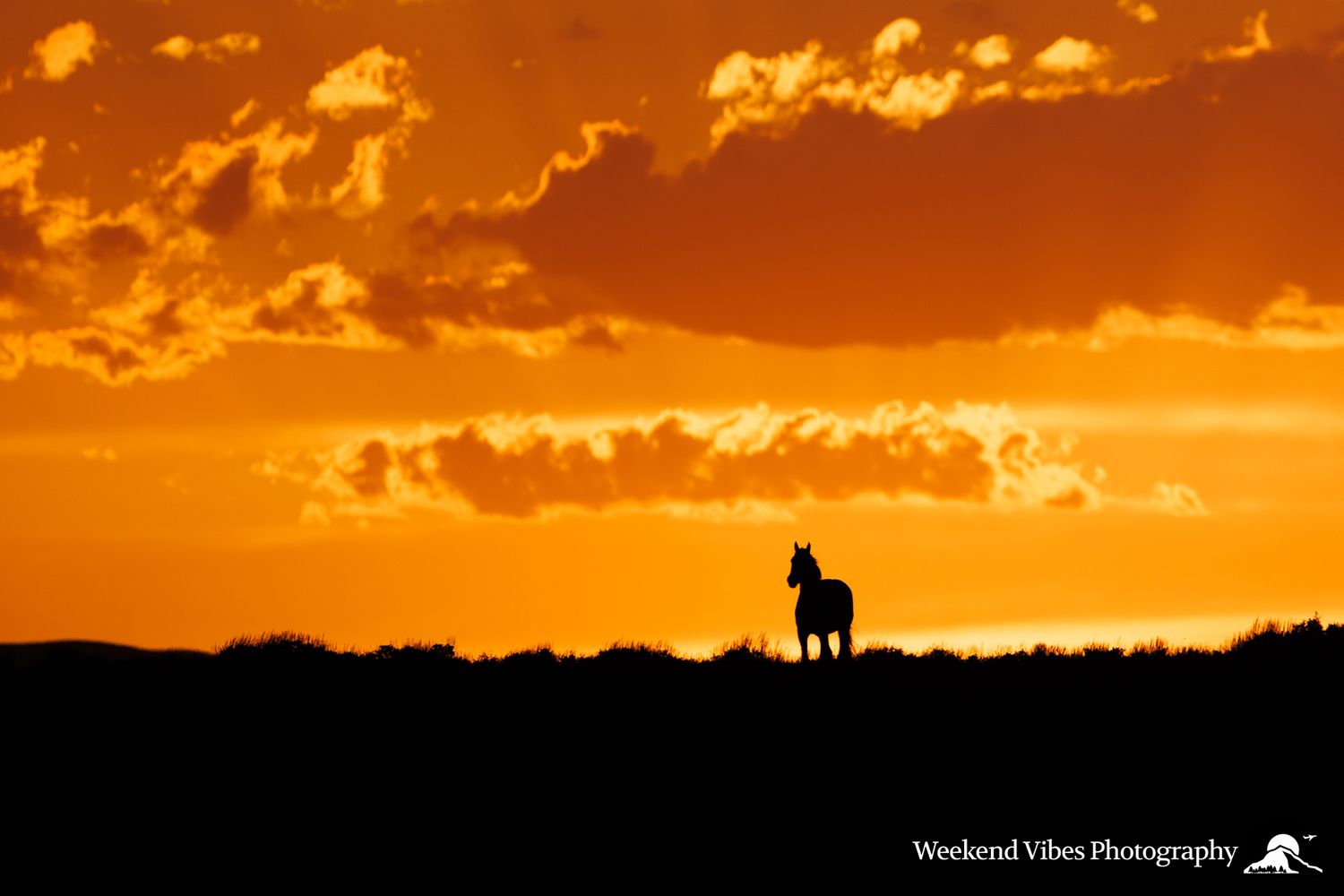
That brings us to a very hot topic: Helicopter round ups.
Helicopters have become one of the most visible and controversial tools used to manage America’s wild horses. Their use was not authorized in the original 1971 Wild Free Roaming Horses and Burros Act. In fact, the earlier law from 1959 prohibited using aircraft or motorized vehicles to hunt wild horses on public land. Congress later changed federal law in 1976, expressly authorizing the use of helicopters in wild horse management. So yes, as it stands today, using helicopters is legal.
BLM supports helicopter “gathers”. They argue they provide an efficient way to locate and gather large numbers of animals spread out across thousands of acres. The BLM maintains that helicopter round ups are humane and can have relatively low rates of serious injury or death.
Opponents of helicopter round ups question how chasing a wild animal with a helicopter can ever be considered the most humane management option. Beyond death, and yes, it has happened, opponents point to fear, exertion, separation of family bands, injuries, stress, terrain, and the transition from free roaming into corrals and transportation as direct issues of this method. It doesn’t stop there. Many injuries, often resulting in euthanasia, occur in the corrals, trailers, and pens the horses are kept in.
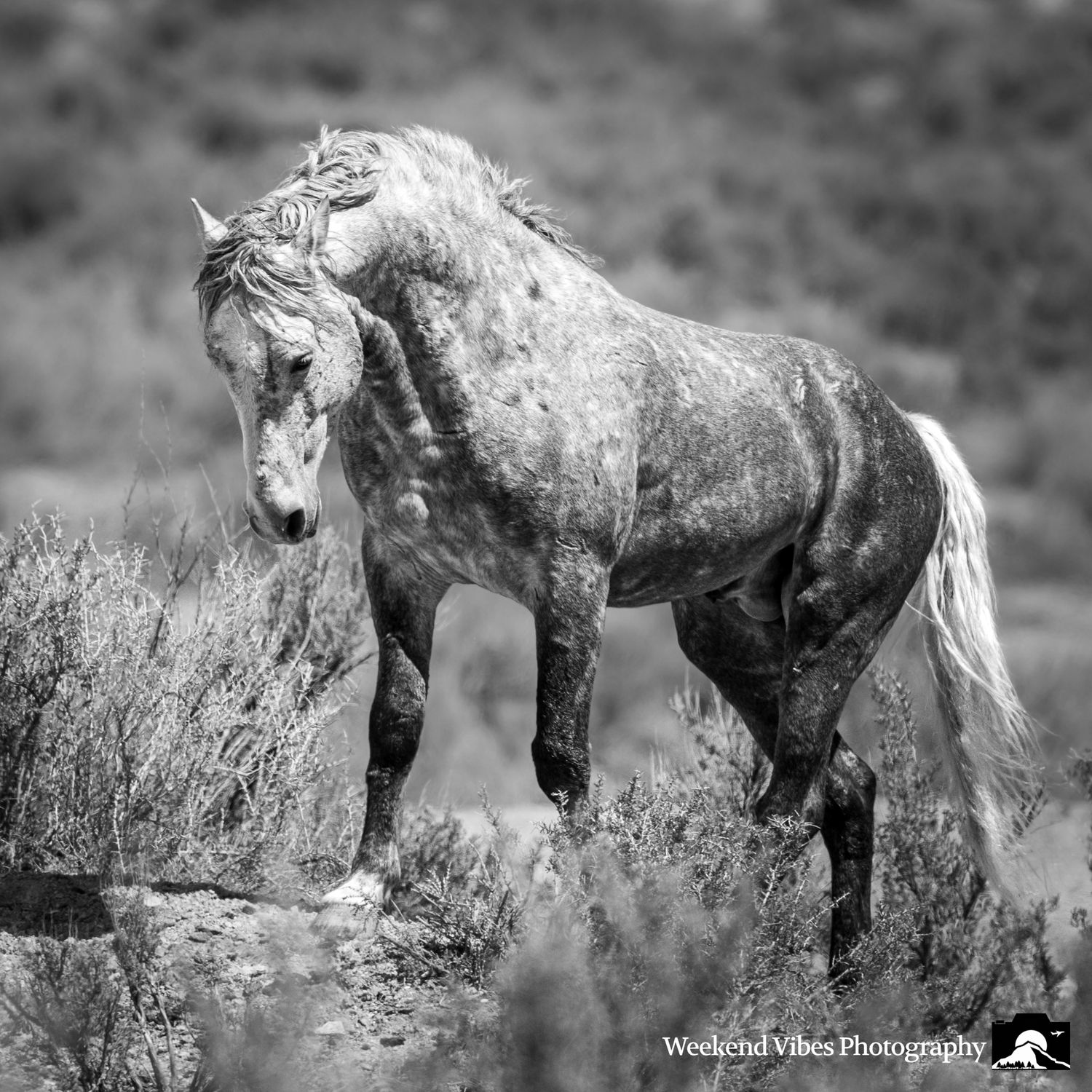
But let’s not turn this into a BLM vs Advocate debate, as it usually goes online. Let’s again review the BLM documentation regarding helicopters.
BLM’s own policy explicitly anticipates gather related injuries. It requires injuries requiring veterinary examination or treatment, deaths, and spontaneous abortions to be recorded in gather reports. It also provides procedures for animals that become injured or distressed during gather operations. This directly acknowledges that animal advocate concerns are valid.
The problem with this is that if the BLM doesn’t have a veterinarian on site during "gathers", then they can’t examine the animal. If that doesn’t happen, well then, we guess it’s not required to be included in the gather report. And make no mistake, veterinarians are not always on site, such as the 2026 Sand Wash Basin round up.
Going back to the 2021 Sand Wash Basin round up, the BLM reported two deaths as “non-gather related”. That is interesting. In the 2022 Piceance/East Douglas round up, the BLM reported 6 deaths, all of which they classified as pre-existing conditions.
We never knew a helicopter chasing an animal down was a pre-existing condition, but there you go.
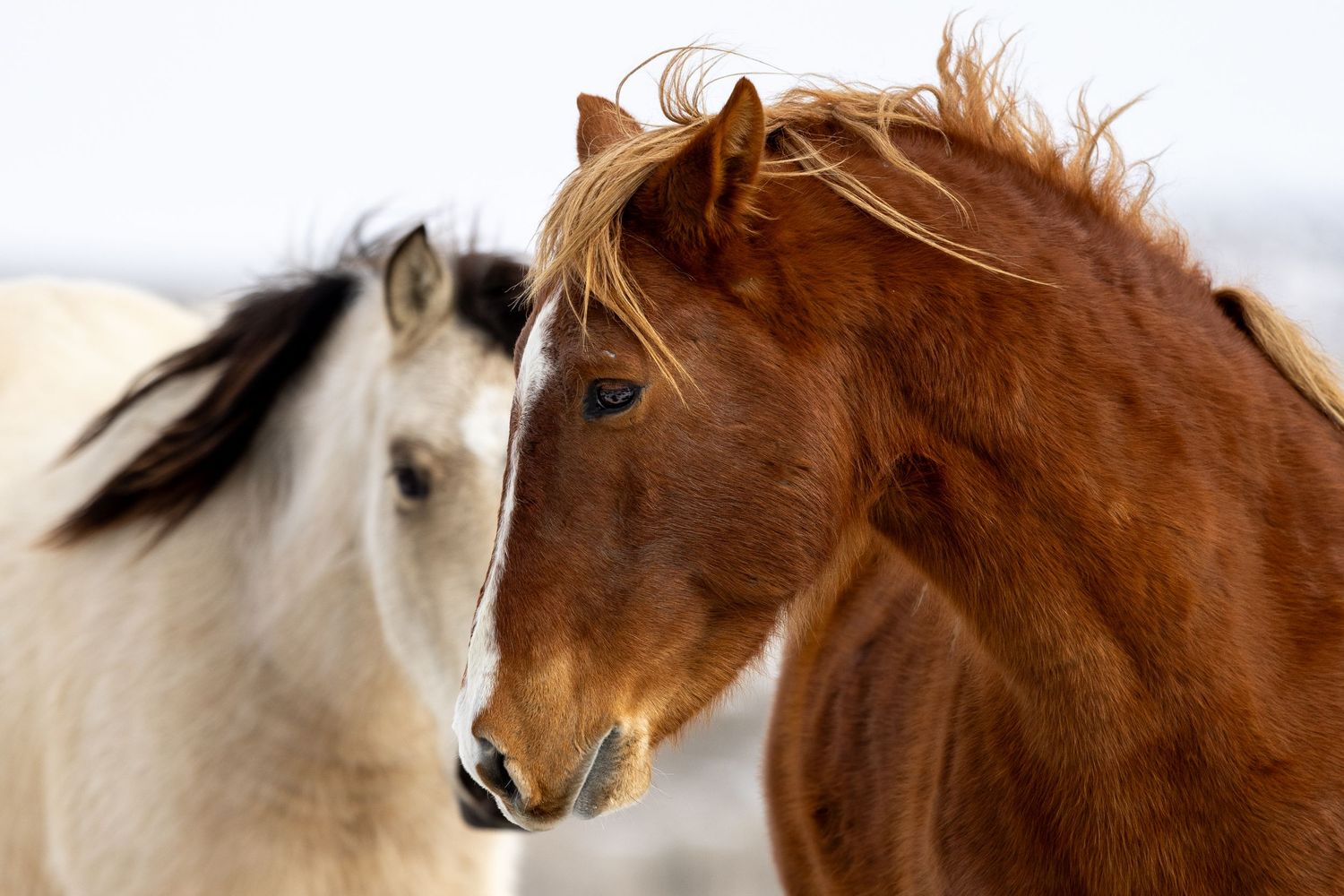
So far, we’ve only talked about death recorded during round ups, so let’s now take a moment to talk about just a few injuries that have occurred.
- Twin Peaks HMA, October 2024: 3 year old mare broke her neck after running into a panel during sorting.
- Sulphur HMA, February 2022: 18 year old stallion broke his neck after hitting a panel during sorting.
- Cedar Mountain HMA, September 2022: 16 year old stallion fractured his neck after hitting a panel during sorting.
- North Lander, July 2024: Foal found in temporary holding with a broken leg and euthanized.
- Checkerboard, September 2014: Yearling colt found dead in holding after suffering from an acute neck injury from running into the panels.
- Little Book Cliffs, September 2024: 24 year old mare euthanized after suffering an acute injury to right rear leg.
I want us to stay on this for a moment. These examples are but a few of the horrendous injuries the wild horses have endured. These are not anecdotal stories from advocates; these are directly from BLM documentation.
That last one really gets us. A 24 year old mare that has lived successfully wild her whole life and is entering into her twilight years was chased from her home and injured her knee. Just like that, her life is gone. For what? She is well past reproduction age and therefore is not adding to the population on the range.
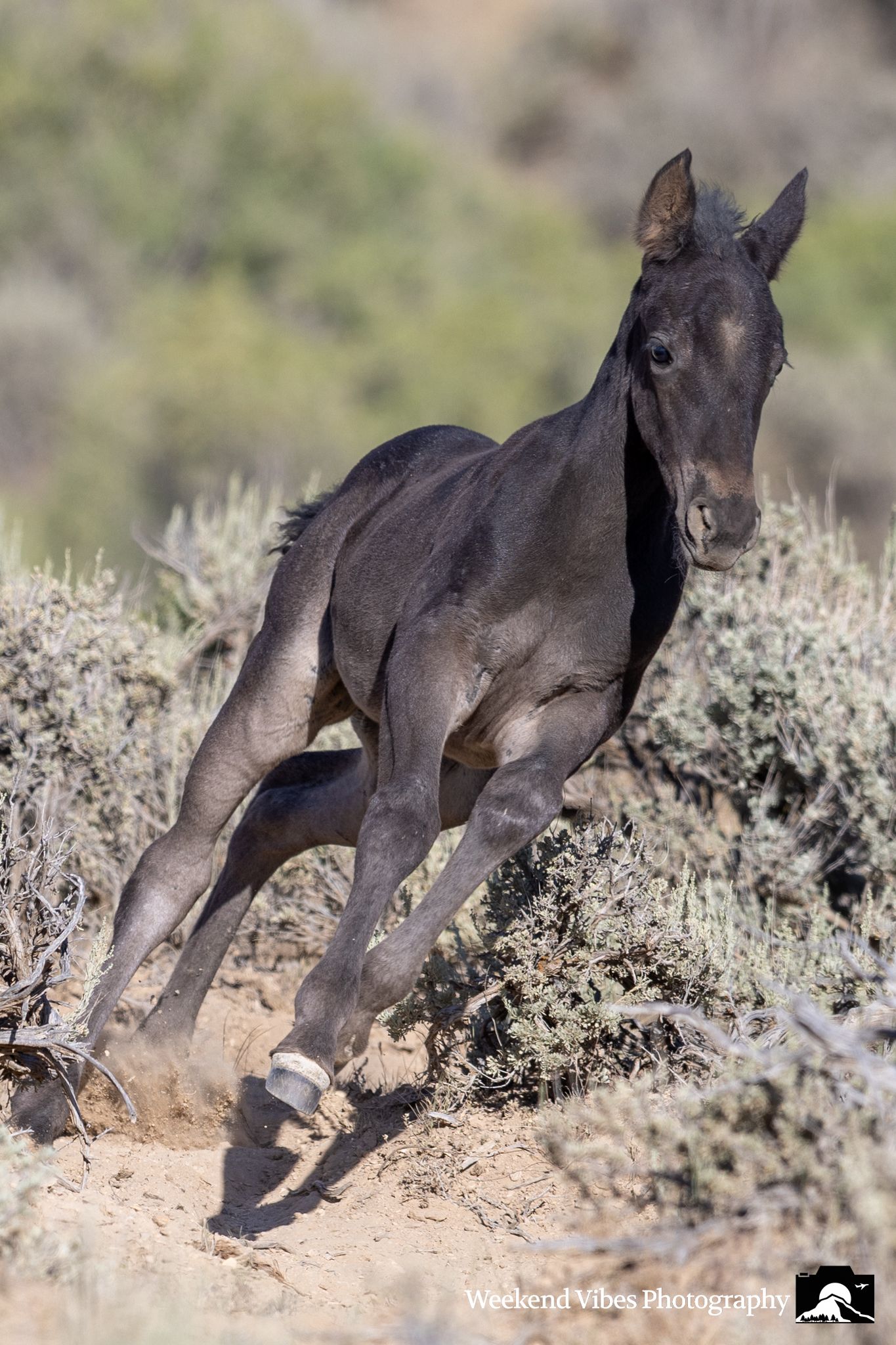
The risks associated with helicopter round ups are not merely theoretical.
The BLM’s own reports document horses suffering serious injuries during capture and handling. The BLM summarizes an average mortality rate of 1 in every 300 captured, for .33%. More recent helicopter “assisted” operations have averaged about .5% mortality. Mortality and injury are not the same measurement. A mortality rate tells us how many animals die from gather related injuries; it does not by itself tell us how many animals were injured but survived, or measure other welfare effects associated with pursuit, capture, sorting, temporary holding, and transportation. As citizens whose tax payer dollars pay for this program, we are not comfortable with any mortality rate being acceptable at all for a federally protected animal.
The BLM states that is committed to the operational transparency of its helicopter assisted wild horse and burro gathers, asserting that it welcomes the public and media to observe these operations from designated viewing areas. BLM’s previous national gather policy explicitly stated: Every gather day is considered a public observation day. It described its purpose as providing safe and transparent visitation by the public/media.
For the 2026 Sand Wash Basin round up, BLM specifically offered designated observation days and expressly reserved the ability to cancel them because of weather, safety, changing gather locations or operational limitations. On September 19, BLM said operations continued but public observation was canceled because of flooding, washouts and impassable roads. They never offered the last day as an option for the public to sign up.
Did they stop the round up? No.
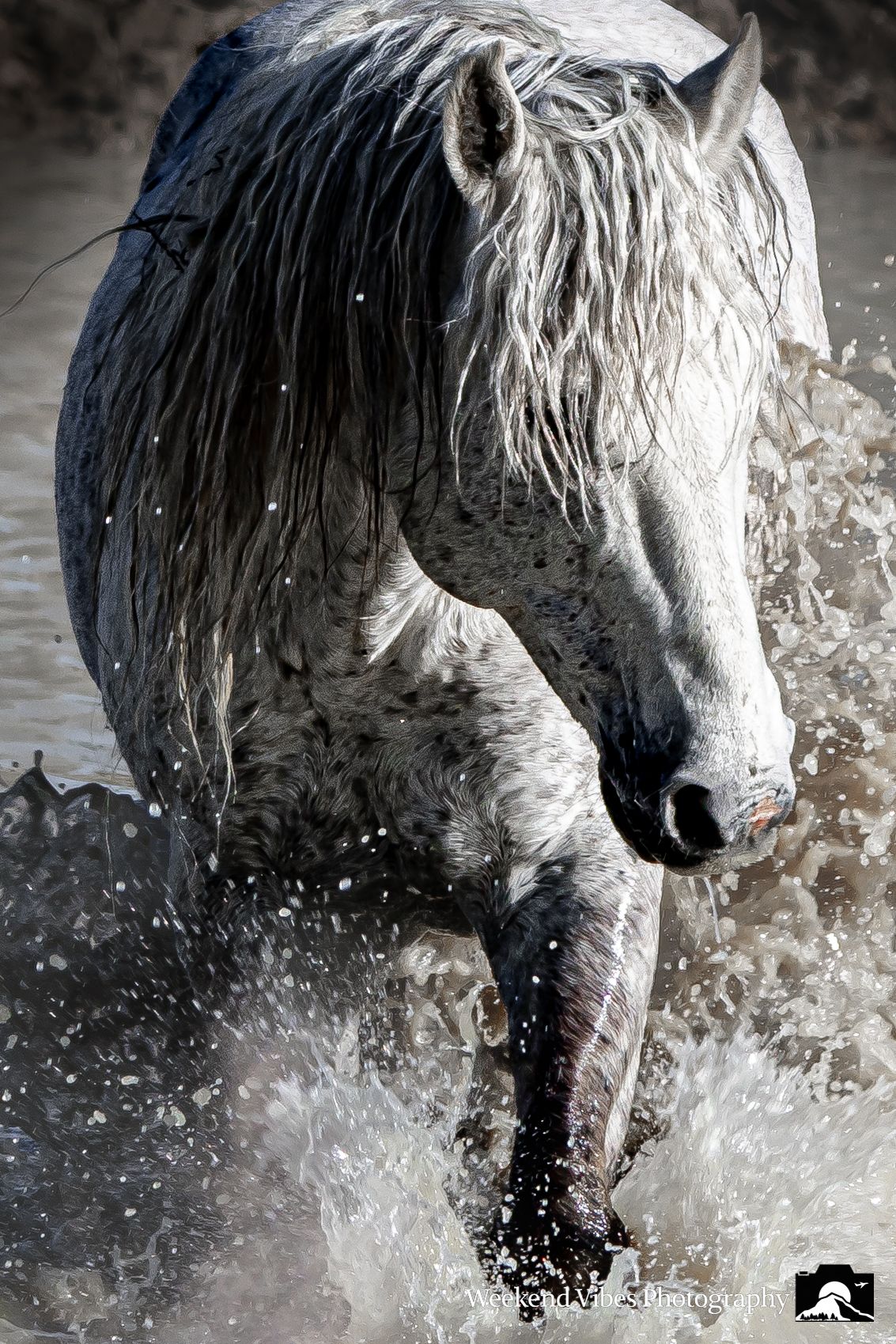
We advocate for moving away from a roundup method that carries a documented risk of injury and death. Ultimately, we advocate for ending the use of helicopters in wild horse roundups altogether.
But as long as helicopter roundups continue, we believe the public should be able to fully see and understand how they are conducted.
BLM maintains that helicopter gathers are humane and safe. If that is the agency's position, greater transparency should reinforce it, not threaten it.
As taxpayers and members of the public, we would like to see comprehensive video documentation of helicopter roundup operations. BLM personnel, contractors, and other parties, directly involved in the capture and handling of horses should wear body cameras, with additional cameras mounted on appropriate equipment. That footage should be available through livestreaming or timely public release.
When a horse is seriously injured, euthanized or dies during an operation, the corresponding footage should be preserved and made available to the public, subject to legitimate legal and safety restrictions.
This would accomplish two things. It would allow BLM to maintain its responsibility to keep public observers and media a safe distance from active operations while providing meaningful public visibility. It would also create an objective record that could either substantiate concerns about animal treatment or protect BLM employees and contractors from allegations that the evidence does not support.
If these operations are humane and safe, transparency should help demonstrate that.
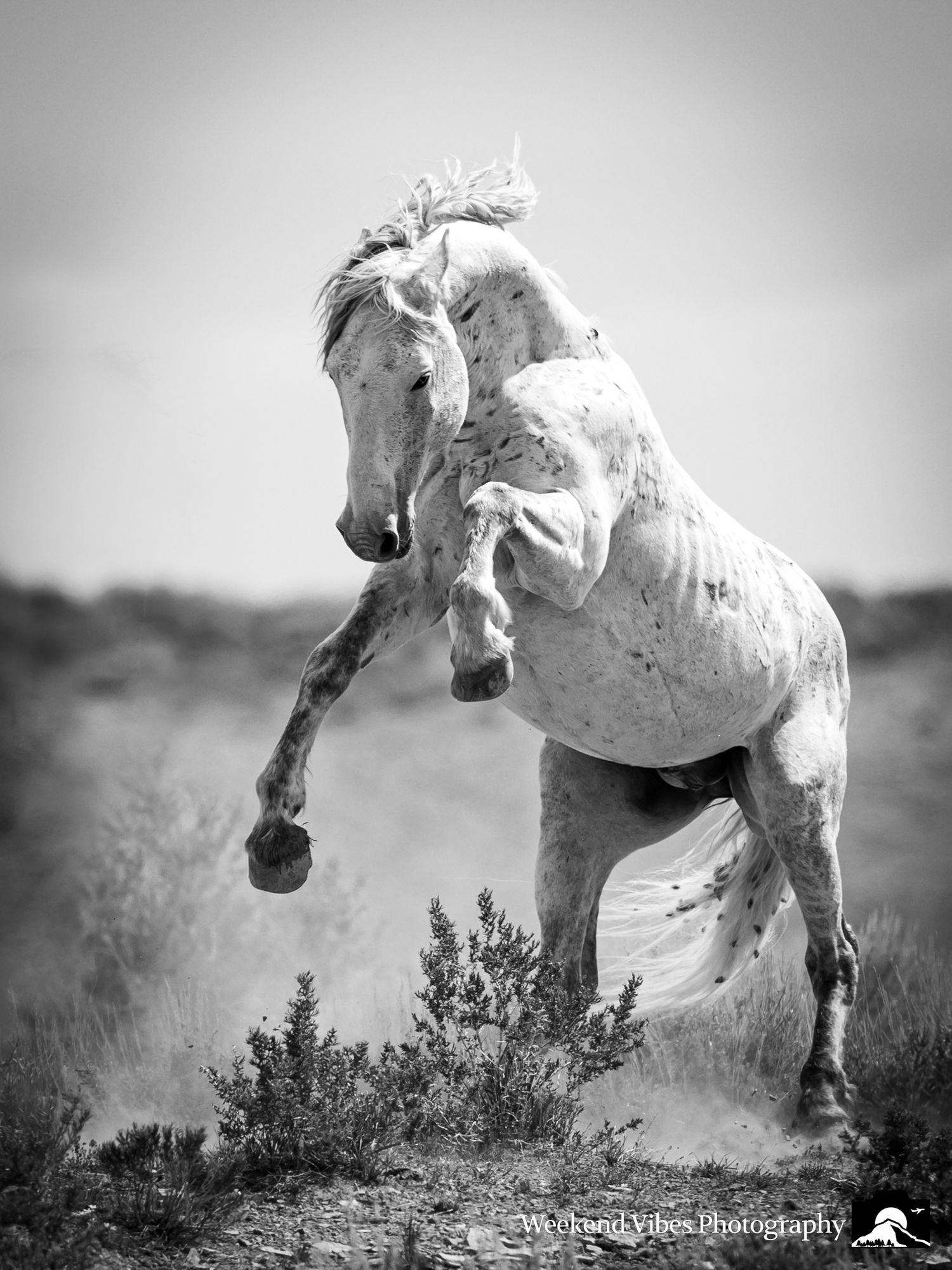
And while we have relied heavily on BLM's own documentation throughout this discussion, there is another side to helicopter roundups that statistics and agency reports do not always capture: what happens to individual horses and their family bands.
In 2021, during the Sand Wash Basin roundup, mare Sitara and her three month old colt, Cassini, were pursued during the helicopter operation. During the roundup, Cassini became separated from his mother.
Think about what that means for a three month old colt on the range. We have already discussed concerns about forage and resources. At that age, remaining with his mother can still be critically important.
Cassini was later found with stallion Motor. Over the years that followed, photographers who knew these horses continued documenting him, allowing pieces of his story to be put together. Cassini survived the 2021 roundup and the years that followed. We have to add here though that he again faced a helicopter round up in September of 2026. He is one of the fortunate ones who avoided the helicopters both times. We'd like for him to never have to face them again in his lifetime.
Stories like his are also a reminder that mortality statistics cannot tell us everything about the impact of a roundup. A horse does not have to die for an operation to profoundly alter its life or the structure of its family band.
There is another concern that deserves attention: what happens after horses enter the trap and holding areas.
Wild stallions have spent their lives navigating relationships with other stallions while protecting their family bands. On the range, confrontations can involve posturing, threats and brief physical encounters, but horses also have space to disengage and move away. During a roundup, unfamiliar or competing stallions may instead be concentrated into confined sorting and holding areas where those opportunities are limited.
That raises an important animal welfare question: If confinement itself creates additional opportunities for conflict, stress or injury, how should the capture, sorting and holding process be designed differently to reduce those risks?
That is the kind of question we believe deserves more attention. It deserves documentation, transparency and continued evaluation of whether there is a better way.
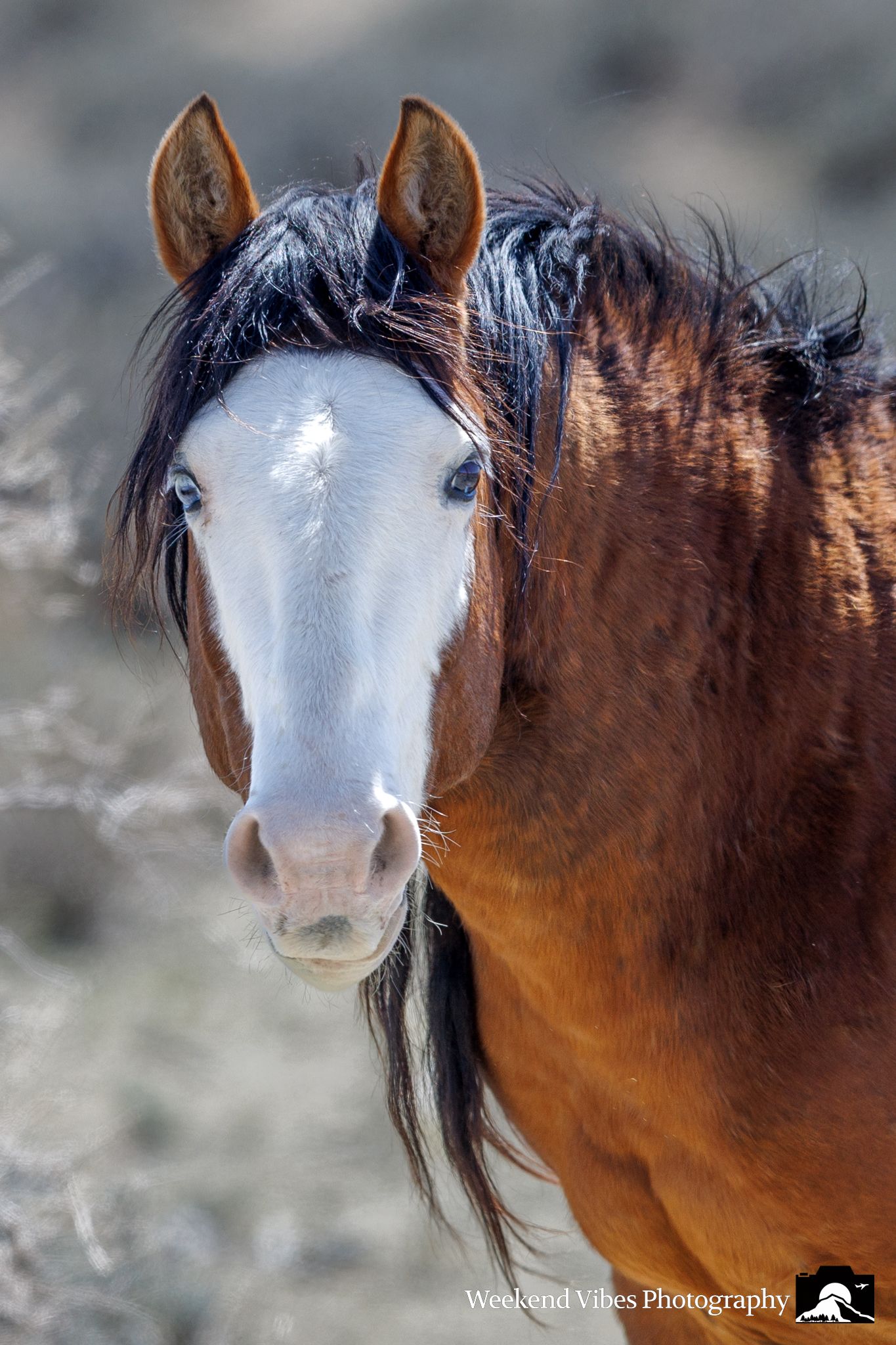
Does the BLM fly the helicopters themselves?
Well, let’s talk about that next. When a BLM helicopter appears over a wild horse herd for the sole purpose of driving them across rough terrain into a trap, the pilot is not necessarily a federal employee. The federal government contracts much of this work to private companies. One of the most prominent is the Cattoor Livestock Roundup, Inc., a family run company based in Utah that has performed wild horse round ups for the federal government for decades.
Side note: The BLM consistently calls round ups "gathers". We aren't sure why but suspect they like to soften the wording a bit, make it more palatable to the public. So it's amusing to us that they contract a company with the word "roundup" in their name. But, we digress.
According to the BLM, Cattoor has been rounding up wild horses for the agency since 1975. This long relationship has not been without controversy. In 1992, founder Dave Cattoor pleaded guilty to a misdemeanor count of “Use of Aircraft to Capture Wild Horses”. This was during his work for the Duckwater Indian Tribe in Nevada on non BLM land. The issue reportedly involved wild horses being captured and ultimately shipped to a Texas slaughter facility.
Congressional testimony later specifically raised Cattoor’s conviction and questioned why the BLM continued using him as a contractor. The BLM maintained that the conviction was not for animal cruelty (never mind where these poor horses were ending up) and still considered Cattoor a valid contractor.
In 1991, another wild horse contractor challenged BLM’s decision to award a Nevada round up contract to Cattoor. The Government Accountability Office reviewed the complaint. The competing contractor offered a lower price, approximately $67.12 per animal compared to Cattoor’s $85.28, but the BLM still awarded the higher contract. GAO upheld the award.
The relationship between the federal government and this family run business goes back decades. Just how much of tax payer dollars are going into the pocket of this company? An analysis of federal contracting records published by the American Wild Horse Campaign found that Cattoor received approximately 26.2 million from 153 BLM contracts beginning in 2006, plus approximately 2.4 million from 5 U.S. Forest Service contracts and another 2.2 million in other federal contracts. Keep in mind, this is data from 2006 and their relationship goes back to 1975.
Let’s also not confuse these numbers with the current contract numbers.
A contract awarded to Cattoor in 2020 had a ceiling of 9.4 million, with 8.3 million obligated under it. In 2022, a 10 million dollar contract was awarded and in 2023, a 20 million dollar contract was awarded. In 2025, BLM awarded yet another contract to the Cattoor’s for indefinite delivery for wild horse and burro drive trapping services with a potential value of up to 72 million. Keep in mind, we are only talking about contracts awarded to Cattoor, not all round up companies.
When the BLM talks about how expensive fertility treatment is and relies on private citizens to volunteer their time to administer fertility treatment, please remember these numbers. Understand why that narrative can be perceived as smoke and mirrors from the BLM. In fiscal year 2024, approximately two thirds of Wild Horse and Burro Program expenditures went to off range holding alone. That raises a legitimate question: what would the long term financial impact be if substantially more resources were directed toward preventing population growth before removal becomes necessary?
Helicopter round ups are what they have chosen to spend our tax payer dollars on. The federal government has chosen for decades to spend money on round ups, removal, and holding, rather than preventing the need for their removal in the first place. They have also chosen to continually employ a company that has no qualms about rounding up horses who are slated for the slaughter pipeline and in fact, has pleaded guilty of their involvement in that endeavor.
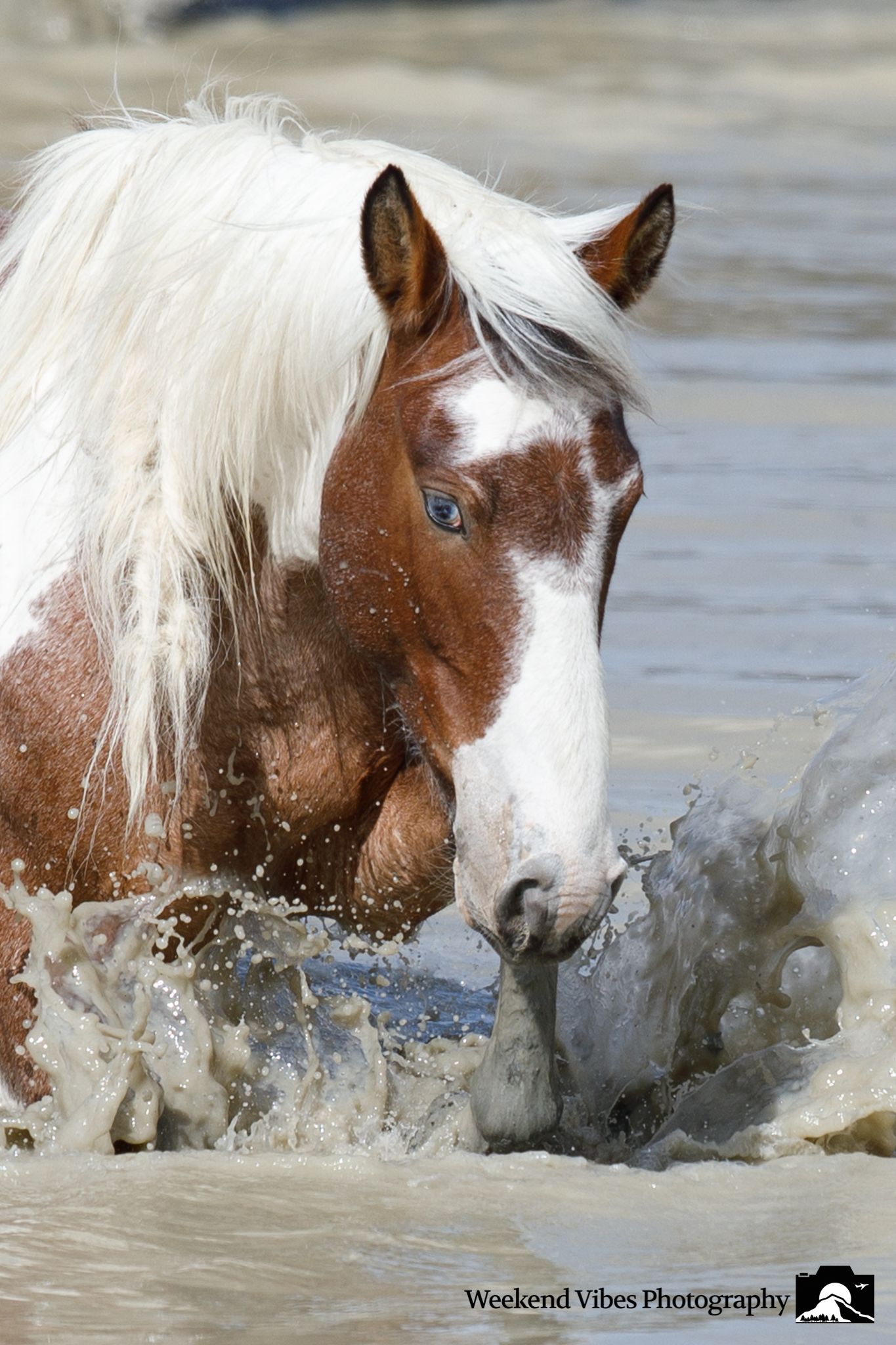
This leads me to the next point that gets perpetuated online repeatedly: Wild horses are rounded up by the BLM specifically to send to slaughter.
This is not the case. However, there is documented evidence going back decades that federally protected wild horses have entered commercial slaughter pipelines after leaving federal ownership. This isn’t based on advocacy investigations; the Government Accountability Office and the Department of the Interior Inspector General have documented it.
The pathway to slaughter: A horse gathered from an HMA remains federally protected while it is owned by the federal government. BLM may place the horse in holding and then offer it for adoption or in some cases, for sale.
With adoptions, BLM retains ownership for at least one year. After the adopter demonstrates appropriate care, BLM issues the title. At that moment, the horse becomes private property and is no longer protected as a federal wild horse. This sounds legitimate without further scrutiny, but it is riddled with documented problems.
In 1990, the GAO investigated a BLM waiver adoption program and found widespread commercial exploitation. Investigators obtained 3,751 BLM wild horse titles from just four slaughterhouses in Nebraska and Texas. GAO found that some agents sold as many as 99% of the horses they acquired, many within 30 days of receiving the title. GAO’s conclusion stated, “thousands of horses” were sent to slaughter after title pass.
More recently in 2015, the Department of the Interior’s Office of Inspector General investigated a Colorado livestock hauler Tom Davis. Between 2008 and 2012, Davis purchased approximately 1,700 BLM wild horses. During the federal investigation, Davis admitted that most of those horses went to slaughter. He denied personally transporting them directly to slaughter, but the Inspector General concluded that most ultimately entered the slaughter pipeline.
Keep in mind, the BLM already had policies in place intended to prevent federally protected animals from being sold for slaughter.
Fast forward to 2019 when the BLM launched the $1,000 Adoption Incentive Program. Instead of someone paying to only adopt a horse, the government offered adopters an incentive of up to $1,000 per animal. Subsequent investigations by the American Wild Horse Campaign/Conservation alleged that some participants were essentially adopting horses, maintaining until title, collecting the incentive, then disposing them through livestock auctions and kill pens. Its 19 month investigation reported finding at least 840 BLM horses and burros at slaughter auctions or kill pens after the incentive program began.
In case you’re wondering, the BLM itself defines a kill pen as a livestock holding facility where horses acquired by slaughter buyers are held before being transported for export to slaughter plants outside the United States.
Kill pens are exactly what you would imagine when you see the words. Think of them as a waiting room for unwanted horses and discarded livestock. You can imagine that there isn't a good reason to take care of the animals in those pens when they're slated for slaughter anyways. All because someone decided living, sentient beings had more value dead than alive.
Aside from that, we personally know several amazing adopters and their account of the BLM vetting process varies widely, if it happens at all, within the state of Colorado. This gives us the opinion that although the BLM has formal guidelines and procedures in place to ensure adopters are appropriately vetted, many times this does not actually happen.
The last thing we want to address in this post is the extreme rhetoric we see from both sides of this issue online.
Every round up brings out the keyboard warriors. Political rants. Blanket hatred of the BLM. People wishing helicopters would crash or harm would come to those involved. None of that helps these horses.
The hostility certainly isn't limited to one side. We see an incredible amount of contempt directed toward the people who care about wild horses. Anyone questioning the BLM management can quickly be dismissed as an emotional, uninformed horse advocate who doesn't understand rangeland management. Horse lovers are blamed for caring too much, knowing too little, or somehow loving these animals at the expense of everything else that shares the landscape.
All of that adds noise to an issue that deserves a much more thoughtful conversation.
Let’s be clear about where we stand.
We, Weekend Vibes Photography, do not hate the BLM or the people who work for it. We don't wish harm on anyone. We don't condone threats, violence or illegal activity, and we certainly don't wish for helicopters to crash.
We also don't place this issue at the doorstep of any single president, political party or administration. As we've documented throughout this post, the problems surrounding federal wild horse management have developed over decades, through changing laws, policies, administrations and leadership.
But rejecting hatred and extremism does not mean we won't criticize the system.
Good citizens should show basic human decency of respecting the people working within an agency while questioning the decisions that agency makes. We can acknowledge that wild horses require responsible management while questioning how population targets are established. We can recognize that BLM has a difficult multiple use mandate while asking whether livestock, wildlife, and wild horses are receiving an equitable share of public resources. And we can strongly oppose helicopter round ups while advocating for practical alternatives such as fertility control, bait trapping, and greater investment in on range management.
Those aren't contradictions. That's what informed advocacy should look like.
We encourage you to be a voice advocating for our wild horses. We are including contact information below for both the Colorado State BLM offices and Colorado’s Senators, as well as sample letter templates.
Please note: these are specific to Colorado’s horses and more specifically, Sand Wash Basin. Please feel free to edit this verbiage in your advocacy for your local HMAs.
Who to Contact
Bureau of Land Management: Colorado State Office
Attn: State Director
Email: blm_co_statedirector@blm.gov
Phone: (303) 239-3700
Mailing Address:
Bureau of Land Management Colorado State Office
Denver Federal Center, Building 40
PO Box 151029
Lakewood, CO 80225
BLM Colorado State Office Website
Bureau of Land Management: Little Snake Field Office
Attn: Field Manager
Email: BLM_CO_LSFO_Web@blm.gov
Phone: (970) 826-5000
Mailing Address:
Little Snake Field Office
455 Emerson Street
Craig, CO 81625
BLM Little Snake Field Office Website
Contact Colorado's U.S. Senators
Colorado residents can also contact their U.S. senators regarding federal wild horse and public land management issues.
Senator Michael Bennet
Denver Office
Cesar E. Chavez Memorial Building
1244 Speer Boulevard
Denver, CO 80204
Phone: (303) 455-7600
Washington, D.C. Office
261 Russell Senate Office Building
Washington, DC 20510
Phone: (202) 224-5852
Online Contact:
Write to Senator Michael Bennet
Federal Agency Assistance:
Request Help With a Federal Agency
Senator John Hickenlooper
Denver Office
Byron Rogers Federal Building
1961 Stout Street, Suite 12-300
Denver, CO 80294
Phone: (303) 244-1628
Casework Email: casework@hickenlooper.senate.gov
Washington, D.C. Office
Phone: (202) 224-5941
Online Contact:
Write to Senator John Hickenlooper
Federal Agency Assistance:
Sample Letter to the Bureau of Land Management, Colorado State Office
[Your Name]
[Your Address]
[Your Email Address]
[Your Phone Number]
[Date]
Bureau of Land Management
Colorado State Office
Attn: State Director
Little Snake Field Office
Attn: Field Manager
Subject: Request for Changes to Wild Horse Management and Increased Transparency in the Sand Wash Basin HMA
To Whom It May Concern:
I am writing as a concerned citizen and taxpayer regarding the management of wild horses within the Sand Wash Basin Herd Management Area. I ask the Bureau of Land Management to reevaluate its reliance on large scale helicopter round ups and place greater emphasis on transparent, humane and sustainable on range management.
I recognize that BLM is responsible for balancing population management, rangeland health, animal welfare and multiple uses of our public lands. However, several aspects of current wild horse management deserve greater scrutiny and significantly greater public transparency.
End the Use of Helicopters for Routine Wild Horse Roundups
I ask BLM to end the use of helicopters for routine wild horse roundup operations and transition to management methods that reduce the need for large scale removals, including sustained fertility control, bait and trapping when removal is necessary, and other on range management strategies.
This request is based in part on BLM's own published data.
BLM reports that an analysis of gather operations from 2010 through 2019 found fewer than one capture-related death for every 300 wild horses captured using helicopter-based methods. BLM also states that mortality associated with more recent helicopter-assisted gather operations has averaged approximately one-half of one percent of the animals gathered.
BLM presents these figures as evidence that serious injuries and deaths during helicopter gathers are rare. I reach a different conclusion about what level of preventable risk is acceptable when managing federally protected wild horses.
A low mortality percentage is not the same as no mortality, and mortality alone does not capture the full animal welfare impact of a roundup. BLM's own gather reports document horses suffering serious and sometimes fatal injuries during capture, sorting and temporary holding, including broken legs and fractured neck injuries that result in euthanasia. Those injuries matter independently of the percentage of animals that ultimately die.
BLM's Comprehensive Animal Welfare Program itself establishes detailed requirements intended to reduce injury and stress during capture, handling, sorting, transportation and temporary holding. Those protections are important, but they do not eliminate the inherent risks associated with pursuing, concentrating, capturing and handling wild animals.
BLM also recognizes fertility control as an important management tool capable of slowing population growth and reducing the need for frequent large scale removals. Sand Wash Basin already has an established fertility-control program, individually identifiable horses, trained volunteers and professional darters, and support from the State of Colorado.
For these reasons, I ask BLM to establish a policy ending the use of helicopters for routine wild horse roundups and transition toward sustained on range management and lower intensity capture methods. When removal is demonstrably necessary, I ask BLM to prioritize bait and trapping and other lower intensity capture methods wherever they are feasible.
At minimum, while helicopters remain authorized and in use, BLM should be required to comprehensively document those operations through body cameras, video recording, meaningful public observation and transparent reporting of all injuries and deaths.
Public Observation, Transparency and Body Camera Documentation
BLM has itself recognized the importance of transparency during wild horse round up operations. In its previous national public observation policy, BLM described its procedures as providing for “safe and transparent visitation by the public/media” and stated that “every gather day is considered a public observation day,” subject to legitimate safety and site specific restrictions.
BLM's gather communications policy went even further, stating that “updating the website is a critical element of BLM transparency” and directing gather personnel to provide the public with gather information, photographs and video clips.
I am asking BLM to apply those same principles of transparency using the technology available today.
The 2026 Sand Wash Basin round up demonstrates exactly why this is necessary. On September 19, BLM reported that round up operations continued while public observation was canceled because roads were impassable due to flooding and washouts. I am not asking BLM to place members of the public in unsafe conditions. I am asking BLM to ensure that the absence of public observers does not also mean the absence of independent public visibility into a taxpayer funded operation involving federally protected animals.
BLM should therefore require body camera documentation during wild horse gather operations for BLM personnel, contractors and other operational parties directly involved in the capture, handling, sorting, loading, treatment and temporary holding of wild horses, where wearing such equipment can be accomplished safely.
Body camera footage should be retained as an official agency record and made available to the public subject to legitimate legal, privacy and safety restrictions. When in person observation must be canceled, BLM should also make reasonable efforts to provide recorded, livestreamed or real time video of the operation.
This is not inconsistent with BLM's stated approach to transparency. It is a modernization of it.
If BLM believes its round up operations meet its animal welfare standards, comprehensive video documentation should benefit everyone involved. It would provide the public with an objective record while also protecting BLM employees and contractors from inaccurate allegations about events that can otherwise be difficult or impossible for independent observers to see.
Public transparency should no longer depend solely upon whether observers can safely stand miles away from an active round up site.
Animal Welfare and Independent Oversight
BLM's Comprehensive Animal Welfare Program establishes standards governing capture, handling, temporary holding, transportation and care of wild horses and burros during gather operations.
I ask BLM to ensure strict compliance with these standards, provide appropriate veterinary oversight, thoroughly document injuries and deaths, and make animal welfare assessments and gather reports readily available to the public.
Body camera footage should supplement, not replace, existing CAWP documentation and veterinary reporting. When an animal is injured, euthanized or subjected to emergency treatment, available video documentation should be preserved with the corresponding incident records.
When contractors are used, BLM should aggressively enforce its animal welfare requirements and promptly address conduct inconsistent with those standards.
Appropriate Management Level and Current Range Conditions
Sand Wash Basin's Appropriate Management Level of 163–362 horses has remained in use for many years. I ask BLM to conduct and publicly release a comprehensive, current evaluation of Sand Wash Basin's AML, including the vegetation, water, forage, wildlife, livestock-grazing and wild-horse data used to determine the number of horses the HMA can sustainably support.
Livestock Grazing and Multiple Use
Wild horses are not the only large grazing animals using these public lands. Livestock grazing is an authorized use within and around portions of the Sand Wash Basin HMA.
I ask BLM to provide transparent accounting of forage allocation and actual use by wild horses, livestock and wildlife when evaluating rangeland condition and determining whether wild horses must be removed.
Management decisions should be based on current ecological data and consider all significant uses of the landscape.
Greater Investment in Fertility Control and On-Range Management
BLM itself recognizes fertility control as an important population management tool that can slow herd growth and reduce the need for future large-scale removals.
Sand Wash Basin is particularly suited to this approach because many horses are individually identified and the herd has an established history of remote fertility control treatment.
I ask BLM to prioritize sustained fertility control, range improvements, water resource management, smaller bait-and-trap operations when removal is necessary, and other practical methods that can reduce reliance on large helicopter gathers.
The federal government already spends substantial taxpayer resources gathering, removing and maintaining wild horses in off range care. Greater investment in preventing population growth before removal should be treated as both an animal welfare strategy and a matter of fiscal responsibility.
I respectfully ask BLM to:
- End the use of helicopters for routine wild horse and burro round up operations and establish a transition toward non helicopter management and capture methods.
- Require body cameras for BLM personnel, contractors and other operational parties directly involved in wild horse capture and handling during gather operations, where safe and operationally feasible.
- Preserve body camera recordings as official agency records and establish a process for public access consistent with applicable law.
- Provide livestreamed or near-real-time video of round up operations whenever technically feasible.
- Provide meaningful in person public observation whenever safety and access conditions permit.
- Strengthen veterinary oversight and public reporting of injuries, deaths and animal welfare incidents.
- Contract an unbiased third party to conduct and publicly release a current review of Sand Wash Basin's AML and its supporting ecological data.
- Provide transparent information regarding forage allocation and actual livestock use within the HMA.
- Increase sustained fertility control and other on range population management efforts intended to reduce the need for future large scale removals.
The Sand Wash Basin wild horses are part of Colorado's public land heritage. Transparency should not be controversial, nor should continued evaluation of whether existing management practices remain the best available approach. BLM's own mortality, injury, and animal welfare reporting provides the public with the information to be asking these questions.
I respectfully request a written response addressing these concerns, including whether BLM will consider ending the use of helicopters, expanding fertility control methods, and implementing body camera requirements for future wild horse gather operations.
Sincerely,
[Your Name]
Sample Letter to Colorado's U.S. Senators
[Your Name]
[Your Address]
[Your Email Address]
[Your Phone Number]
[Date]
The Honorable [Michael Bennet / John Hickenlooper]
United States Senate
Washington, DC 20510
Subject: Constituent Request for Congressional Oversight, Body-Camera Requirements and Reform of BLM Wild Horse Management
Dear Senator [Bennet / Hickenlooper]:
As a Colorado constituent, I am writing to ask for your assistance and congressional oversight regarding the Bureau of Land Management's management of wild horses in the Sand Wash Basin Herd Management Area.
Recent helicopter round up operations again demonstrate the need for a broader examination of how these federally protected horses are managed, how taxpayer dollars are being spent and how the public can independently evaluate what occurs during taxpayer funded round up operations.
I respectfully ask your office to request information from the Department of the Interior and BLM and pursue reforms addressing the following issues.
End Federal Reliance on Helicopters for Wild Horse Roundups
I ask your office to pursue federal action to end the routine use of helicopters to round up wild horses and burros on public lands and to redirect federal resources toward sustained fertility control, on range management and lower intensity capture methods when removal is necessary.
This request is supported by BLM's own published information.
BLM reports that an analysis of gather operations from 2010 through 2019 found fewer than one capture related death for every 300 wild horses captured using helicopter based methods. BLM also states that mortality associated with more recent helicopter assisted gather operations has averaged approximately one-half of one percent of animals gathered.
BLM cites these figures as evidence that helicopter gathers have low mortality rates. However, mortality percentages tell only part of the story. BLM's own gather reports document horses suffering serious and sometimes fatal injuries during capture, sorting and temporary holding, including broken legs and fractured necks after animals collided with panels.
These are not allegations based solely upon advocacy accounts. They are incidents documented by the federal agency conducting the operations.
BLM's Comprehensive Animal Welfare Program contains extensive standards designed to reduce injury and stress during capture, handling, sorting, transportation and temporary holding. The existence of those standards is important, but compliance with animal welfare standards does not mean Congress should stop examining whether a different management model could reduce the need to subject wild horses to these risks in the first place.
I therefore ask you to examine legislative, appropriations and Department of the Interior policy options that would phase out the routine use of helicopters for wild horse roundups and substantially increase federal investment in sustained fertility control and other on range management.
Sand Wash Basin provides an opportunity to pursue such a model. The herd has an established fertility control program, many horses are individually identifiable, trained volunteers and professional darters already perform fertility control work, and the State of Colorado has invested its own resources in managing a herd that remains under federal jurisdiction.
When removal is necessary, I ask that BLM be directed to prioritize bait and trapping and other lower intensity capture methods wherever they are feasible.
Until helicopter roundups are discontinued, I also ask Congress and the Department of the Interior to require comprehensive video documentation, including body cameras, operational video and meaningful public observation, so taxpayers have an objective record of how federally protected animals are captured and handled.
Body Cameras and Public Transparency
I ask you to pursue a federal requirement that BLM wild horse gather operations be comprehensively video documented.
BLM personnel, contractors, pilots and ground crews, helicopter and transportation equipment, animal handlers, veterinary personnel, and other operational parties directly involved in the capture, sorting, loading, handling and temporary holding of wild horses should be required to wear body cameras during active operations.
Coverage should include trap sites and temporary holding facilities, particularly the sorting, loading, handling and treatment of injured or distressed animals.
Recordings should be retained as official federal records and made available to the public subject to legitimate legal, privacy and safety restrictions.
BLM should also provide livestreamed or near-real-time video access to round up operations.
I ask your office to examine whether such requirements can be established through Department of the Interior policy, BLM contracting requirements, congressional appropriations language or federal legislation.
Taxpayers fund these operations. The animals involved are federally protected. The public should not have to rely solely upon agency descriptions, contractor accounts or distant observation areas to know what occurred.
Body camera documentation would also protect BLM employees and contractors from unfounded allegations by providing an objective record of their actions.
Sand Wash Basin's Appropriate Management Level
Please ask BLM to provide the scientific and monitoring data currently supporting Sand Wash Basin's AML of 163–362 horses, including when the underlying carrying capacity and forage allocation analyses were last comprehensively reevaluated. Ask for an unbiased third party to conduct a study on the appropriate AML.
Animal Welfare and Veterinary Oversight
Please request documentation regarding BLM's compliance with its Comprehensive Animal Welfare Program during Sand Wash Basin gather operations, including veterinary oversight, reported injuries and deaths, contractor compliance assessments and corrective actions.
Please also request that video documentation associated with serious injuries, emergency treatment or euthanasia be preserved with corresponding animal welfare records.
Federal Spending and Fertility Control
Please examine the significant difference between federal spending on off range holding and spending on population growth suppression.
BLM spends more than $100 million annually caring for horses and burros already removed from public lands, while fertility control represents only a small portion of overall Wild Horse and Burro Program spending.
Colorado has invested state resources in fertility control for federally managed horses, while volunteers have donated thousands of hours identifying, monitoring and treating these animals. I ask your office to determine why BLM continues to rely on volunteers when our tax payer dollars are sufficient to fund fertility control directly through them.
I further ask your office to examine whether greater federal investment in sustained fertility control and other on range management could reduce future removals and long term taxpayer expense.
Livestock Grazing and Forage Allocation
Please request current information showing how forage within the Sand Wash Basin HMA is allocated among wild horses, livestock and wildlife, including authorized and actual livestock use.
Wild horses should not be evaluated in isolation when multiple grazing species use the same public landscape.
Long Term Management of Sand Wash Basin
Finally, I ask you to encourage BLM and the Department of the Interior to work with the State of Colorado, scientists, wild horse organizations, livestock interests and other stakeholders toward a long term management strategy emphasizing fertility control, current range science, transparency and humane on-range management.
This issue is not about eliminating management.
It is about asking whether we can manage these animals better, more transparently and more responsibly.
Specifically, I ask your office to:
- Pursue federal action to phase out use of helicopters for wild horse and burro round up operations.
- Pursue mandatory body camera documentation of federal wild horse round up and handling operations, including bait and trap operations.
- Establish requirements for retention and appropriate public release of those recordings.
- Encourage livestreamed or real time public access whenever technically feasible.
- Request a current scientific review of Sand Wash Basin's AML through an unbiased third party.
- Request detailed CAWP compliance and veterinary documentation from recent Sand Wash operations.
- Examine federal spending on removal and off range holding compared with sustained fertility control and other preventive management.
- Request current information regarding livestock use and forage allocation within Sand Wash Basin.
- Encourage BLM to prioritize humane, sustainable on range management intended to reduce future large scale removals.
Colorado has already demonstrated its willingness to invest in alternatives to the repeated cycle of population growth, helicopter removal and off range holding. I ask the federal government to make the same commitment.
And when removal is deemed necessary, the public deserves an objective record of what happens from the moment the round up begins until the horses leave temporary holding.
Please let me know what actions your office takes in response to these concerns and whether you will support federal body camera and video transparency requirements for wild horse round up operations.
Thank you for your service to Colorado and for considering my request.
Sincerely,
[Your Name]
Sources:
Federal Law, History, and BLM Program
BLM — Wild Horse and Burro Program History
https://www.blm.gov/programs/wild-horse-and-burro/about-the-program/program-history
BLM — Wild Horse and Burro Policy and Legal Resources
BLM — About the Wild Horse and Burro Program
https://www.blm.gov/programs/wild-horse-and-burro/about-the-program
BLM — Wild Horse and Burro Program Data, Populations and Expenditures
https://www.blm.gov/programs/wild-horse-and-burro/about-the-program/program-data
Sand Wash Basin and Colorado
BLM — 2026 Sand Wash Basin Wild Horse Gather
BLM — Sand Wash Basin Wild Horse Gather Environmental Assessment (2021), DOI-BLM-CO-N010-2020-0034-EA
BLM — Little Snake Resource Management Plan, Appendix H: Livestock Grazing Management
https://eplanning.blm.gov/public_projects/lup/65605/79471/91956/A08_LS-ROD_AppH-Grazing.pdf
BLM — Environmental Assessment DOI-BLM-CO-N010-2009-0042-EA: Sand Wash and Related Grazing Allotment Permit Renewals
Renewal of the Sand Wash #04219, Nipple Peak #04225, Cross Mountain #04307, West Spring Creek #04438, and Greasewood #04521 grazing allotments.
BLM — 2026 Sand Wash Basin Wild Horse Gather
BLM — 2025 Sand Wash Basin Bait-Trap Gather
BLM — 2021 Sand Wash Horses Released After Early End to Gather
https://www.blm.gov/press-release/49-sand-wash-basin-wild-horses-released-back-wild
BLM — 2025 Sand Wash Bait Trapping and Fertility Control
BLM — Colorado Fertility-Control Training and Volunteer Program
Colorado General Assembly — SB23-275, Colorado Wild Horse Project
https://leg.colorado.gov/bills/sb23-275
Resource Advisory Council
BLM — Northwest Colorado RAC Members
https://www.blm.gov/get-involved/resource-advisory-council/near-you/colorado/northwest-rac/members
Feral vs. Wild
BLM — Wild Horse and Burro Myths and Facts
https://www.blm.gov/programs/wild-horse-and-burro/about-the-program/myths-and-facts
National Park Service — Ancient Horse: North American Evolutionary History
https://www.nps.gov/articles/000/ancient-horse.htm
National Park Service — Cape Lookout Horse FAQs: “Are They Feral or Wild?”
https://www.nps.gov/calo/learn/nature/horse-faqs.htm
BLM — Wild Free-Roaming Horses and Burros Act and Legal Resources
https://www.blm.gov/programs/wild-horse-and-burro/about-the-program/laws-and-regulations
Congress.gov — Wild Free-Roaming Horses and Burros Act of 1971 (Public Law 92-195)
https://www.congress.gov/bill/92nd-congress/house-bill/9890
Helicopter Gathers, Animal Welfare, and Transparency
BLM — Comprehensive Animal Welfare Program, 2026 Policy
https://www.blm.gov/policy/pim2026-004
BLM — Motorized Vehicle Use, Gather Welfare and Mortality
BLM — 2013 Public and Media Gather Policy (Expired Historical Policy)
https://www.blm.gov/policy/im-2013-058
BLM — 2013 Gather Communications and Transparency Policy (Historical)
https://www.blm.gov/policy/im-2013-061
Documented Gather Injuries/Deaths
BLM — 2024 Twin Peaks Gather Reports
BLM — 2022 Sulphur HMA Gather Reports
https://www.blm.gov/programs/whb/utah/2022-sulphur-hma
BLM — 2022 Cedar Mountain Gather Reports
BLM — 2024 North Lander Gather Reports
BLM — 2024 Little Book Cliffs Gather Reports
Canon City Holding Facility
BLM — 2022 Cañon City Outbreak
https://www.blm.gov/2022-canon-city-outbreak
Slaughter Pipeline and Federal Oversight
GAO — Rangeland Management: Improvements Needed in Federal Wild Horse Program (1990)
https://www.gao.gov/assets/rced-90-110.pdf
Department of the Interior, Office of Inspector General — Investigation of BLM Wild Horse Buyer Tom Davis
Federal Contracting
GAO — Kenneth L. Latham Protest of BLM Contract Award to Dave Cattoor (1991)
https://www.gao.gov/products/b-245137
Ecological Research
Biological Conservation — Managed-as-Wild Horses and Grassland Vegetation (2024)
https://www.sciencedirect.com/science/article/pii/S0006320724000302
PubMed — Semi-Feral Horse Grazing and Grassland Diversity
https://pubmed.ncbi.nlm.nih.gov/40150391/
Science — Equids Engineer Desert Water Availability (2021)
https://www.science.org/doi/10.1126/science.abd6775
USGS — Potential Spread of Cheatgrass by Feral Horses in Western Colorado
The righteous care for the needs of their animals, but the kindest acts of the wicked are cruel.
Proverbs 12:10